Fujisawa Shonandai Cultural Center Children's Museum
An indoor children's museum a 5-minute walk from Shonandai Station in Fujisawa. With casual pricing of 300 yen for adults and 100 yen for kids, the exhibition hall packs in a giant slide, instruments and masks from around the world, a recreated old Japanese house, and play-kitchen corners — a solid half-day of fun and learning.
Information
- Area
- Fujisawa
- Address
- 1-8 Shonandai, Fujisawa-shi, Kanagawa
- Access
- About 5 minutes on foot from Shonandai Station (Odakyu, Sotetsu, Yokohama Municipal Subway)
- Phone
- 0466-45-1500
- Hours
- 9:00–17:00 (last entry 16:30)
- Closed
- Mondays (following Tuesday if Monday is a holiday), the day after public holidays, New Year period *Open every day in August
- Budget
- Exhibition hall: adults 300 yen / children 100 yen / preschoolers free
- Official site
- https://www.kodomokan.jp/
About a 5-minute walk from Shonandai Station in Fujisawa, you descend underground to enter the “Shonandai Cultural Center Children’s Museum.” With admission at 300 yen for adults, 100 yen for kids, and free for preschoolers — almost unbelievable pricing by today’s standards — it’s an indoor spot that can easily fill a whole half-day. I went in treating it as a rainy-day backup, and honestly the depth of the exhibits surprised me.
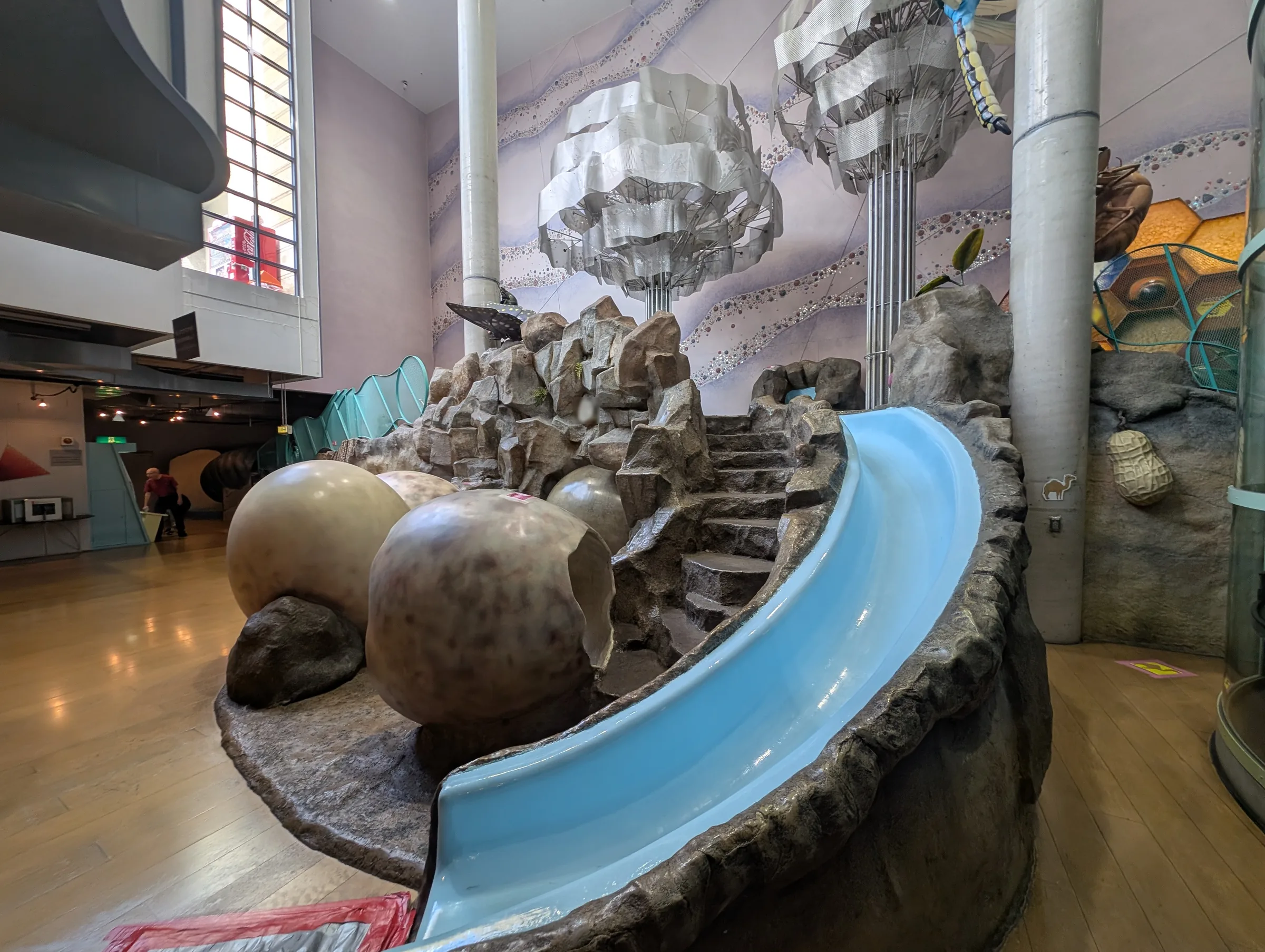
Right in the middle of the hall sits a giant slide carved to look like a rock face. Cloud-shaped metal objects hang from the vaulted ceiling, and the scale of the space feels more like walking into an art museum. The slide itself was a bit slow, but my son kept queuing up again and again to climb and slide endlessly.
World instruments, masks, and folk costumes — surprisingly educational
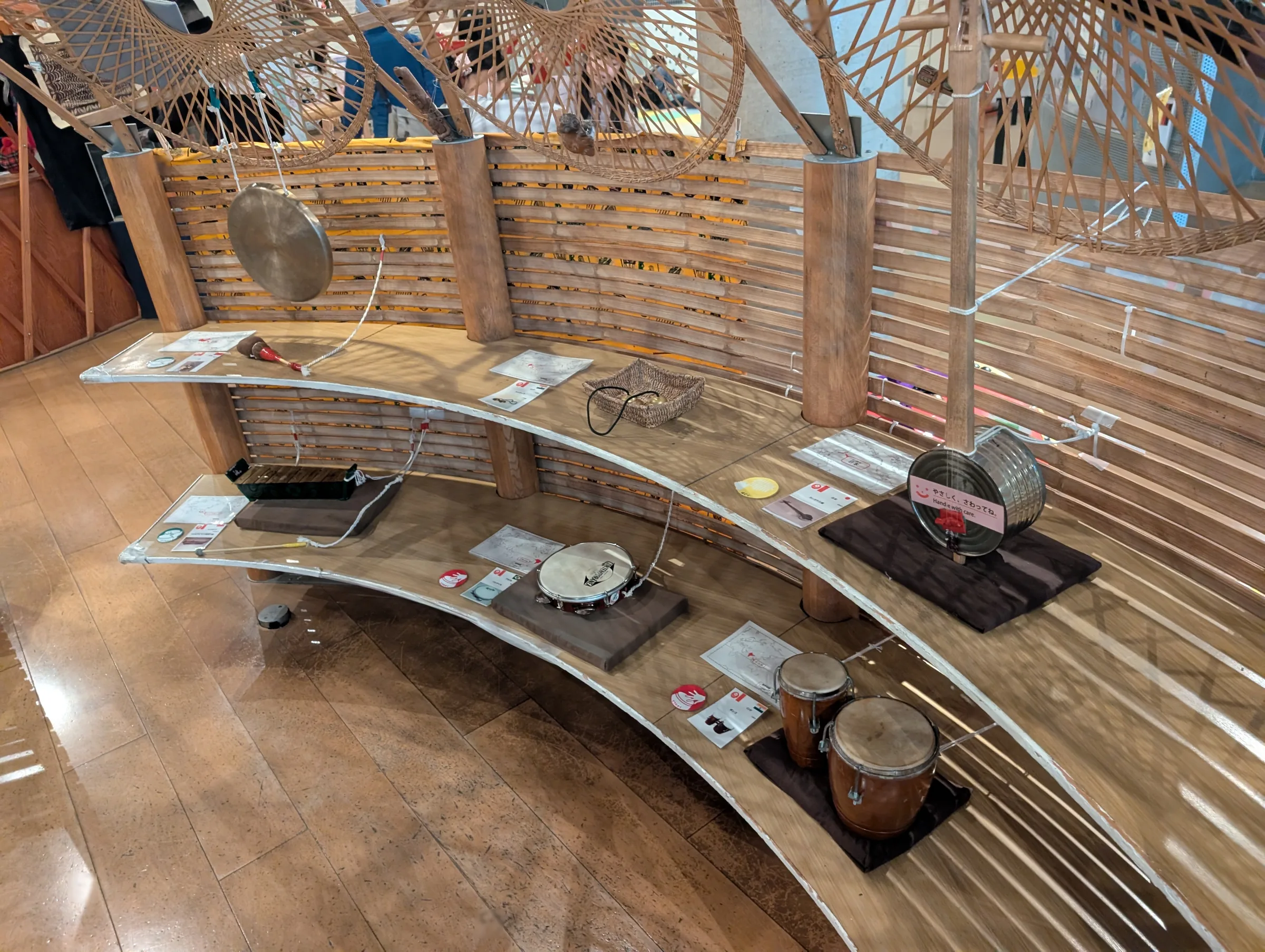
What sets this children’s museum apart is that it’s less of a playground and more of an exhibition hall where you experience world cultures firsthand. The most fun section was the corner lined with instruments from around the world. Gongs, drums, all sorts of cymbal-like pieces — you can actually touch them and make sound. Rather than “behind museum glass,” the design lets kids hit them with their own hands, and that hands-on approach works well.
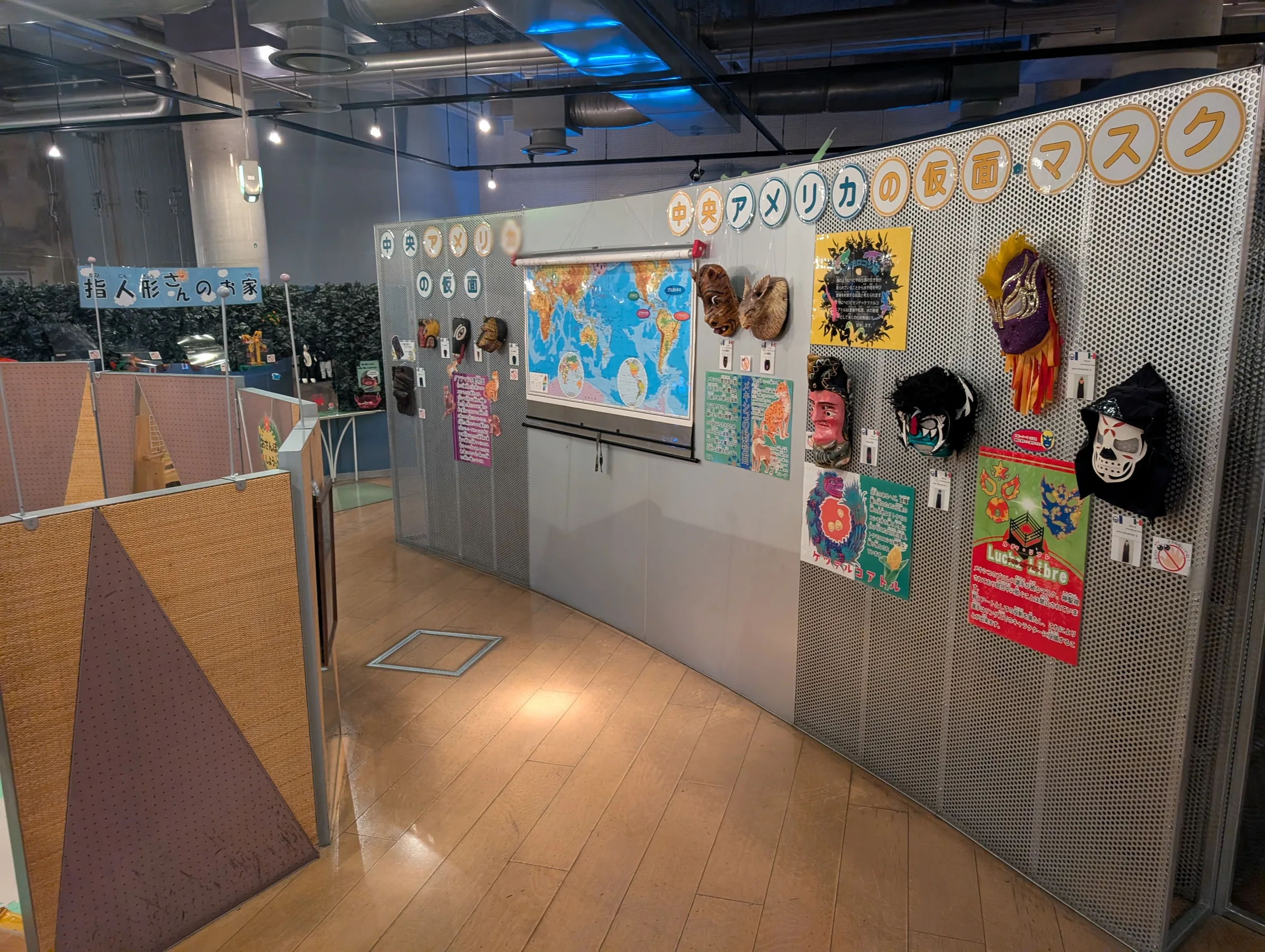
Another floor has a world masks and folk costumes corner. Masks from Africa, Latin America, and Asia line an entire wall, with a world map and explanations alongside. The visual impact is strong, so preschoolers can find it a bit scary. My own kid flinched at first. Still, a place where children can touch something that feels authentic “before they learn about it in social studies at school” is hard to find in the neighborhood.
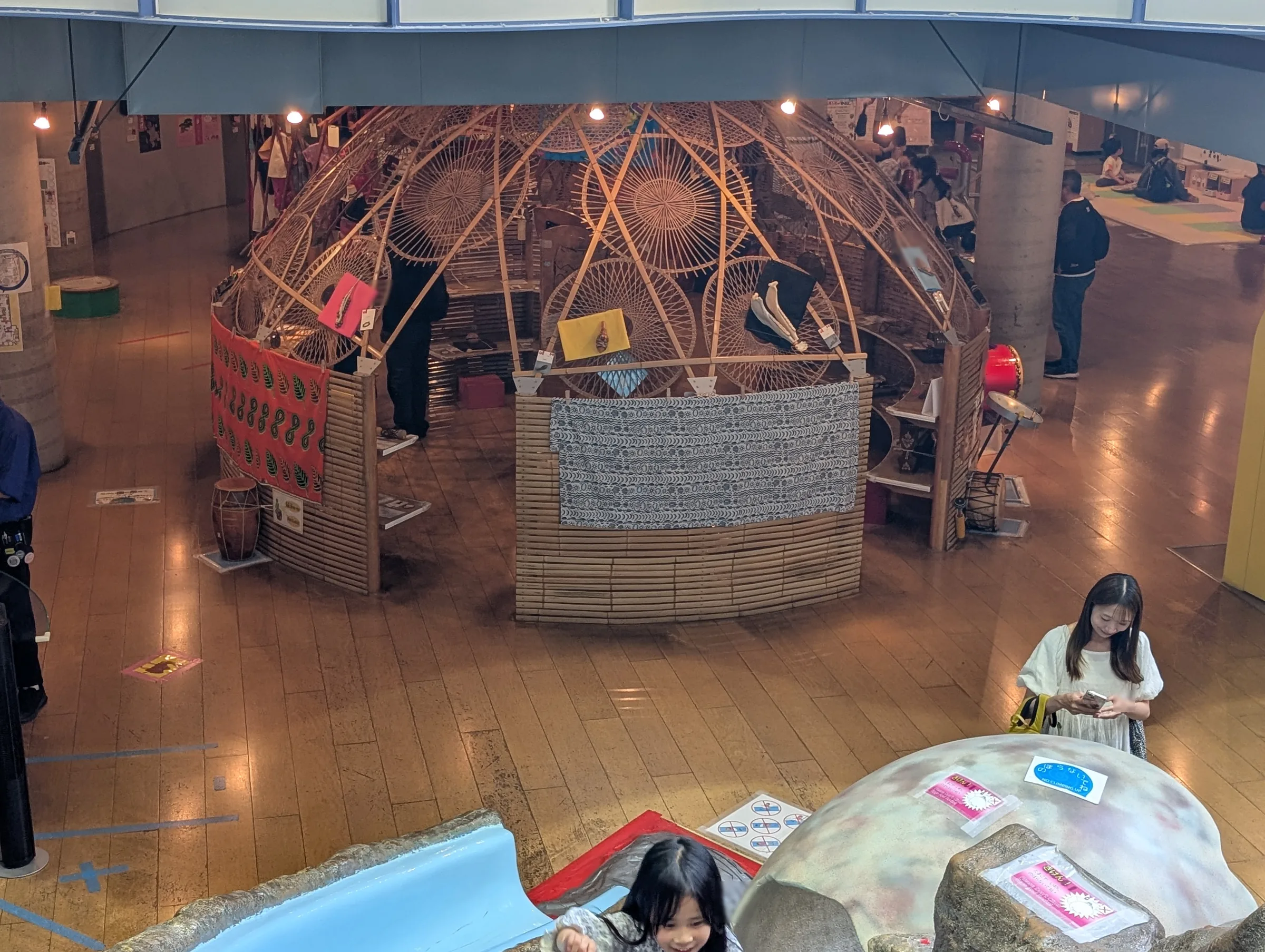
There’s also a large dome-shaped tent woven from bamboo with various displays inside — from a child’s perspective, it’s a complete secret base.
Step inside old Japanese life
After the world comes Japan. There’s an exhibition area recreating an old early-Showa-era house. The earthen-floor area, wooden floor, and tatami rooms are all properly reproduced, and you can even step up to the sunken hearth. Textbooks only get you to “huh, interesting,” but being able to feel the creak of the floorboards and the height of the beams with your body — honestly, the parents may be more impressed than the kids.
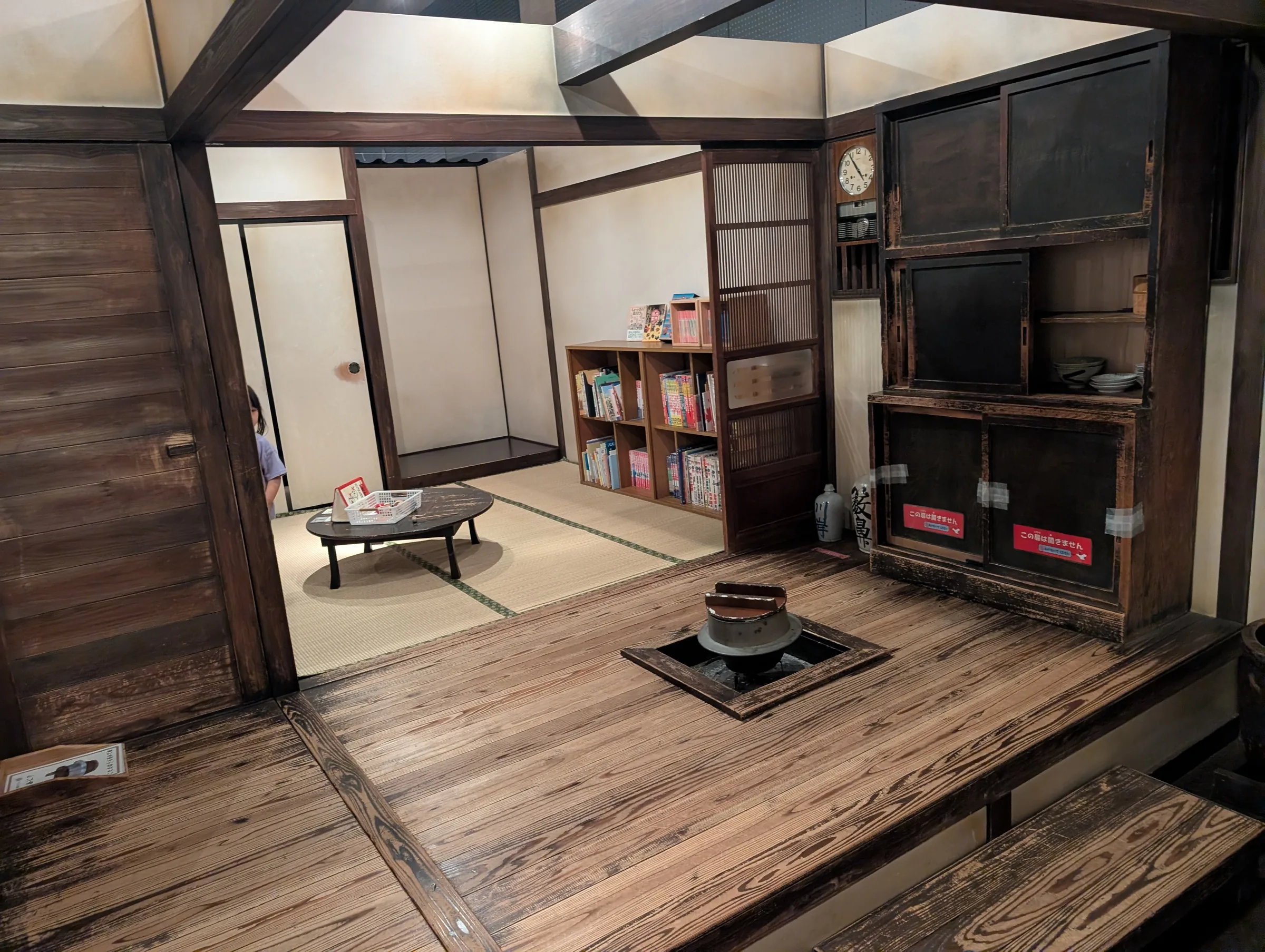
A nice space for learning about life in the past.
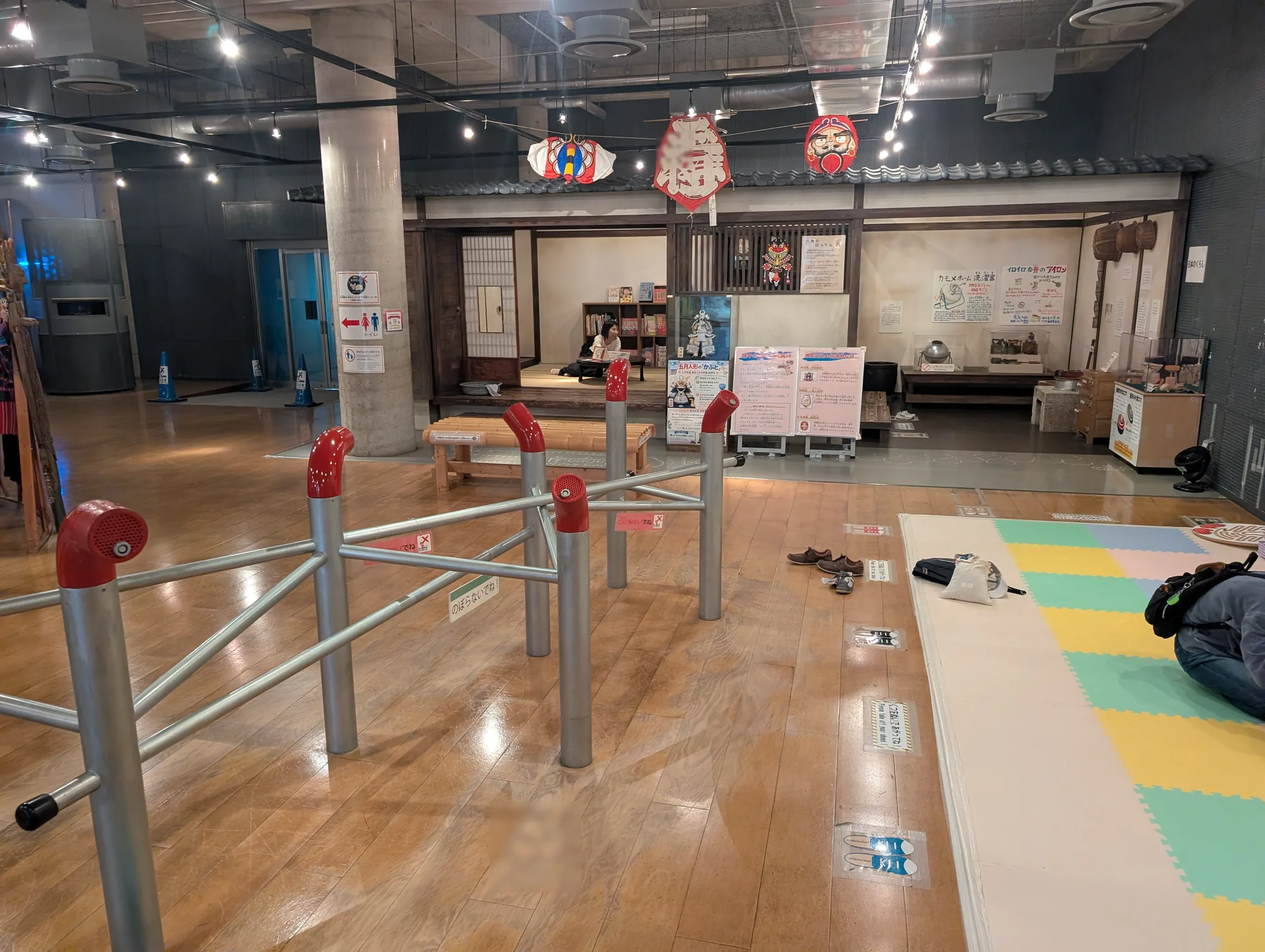
Physical and science exhibits are here too
I said the focus is cultural, but there’s a decent amount of physical activity too. A grip-strength game that measures arm strength,
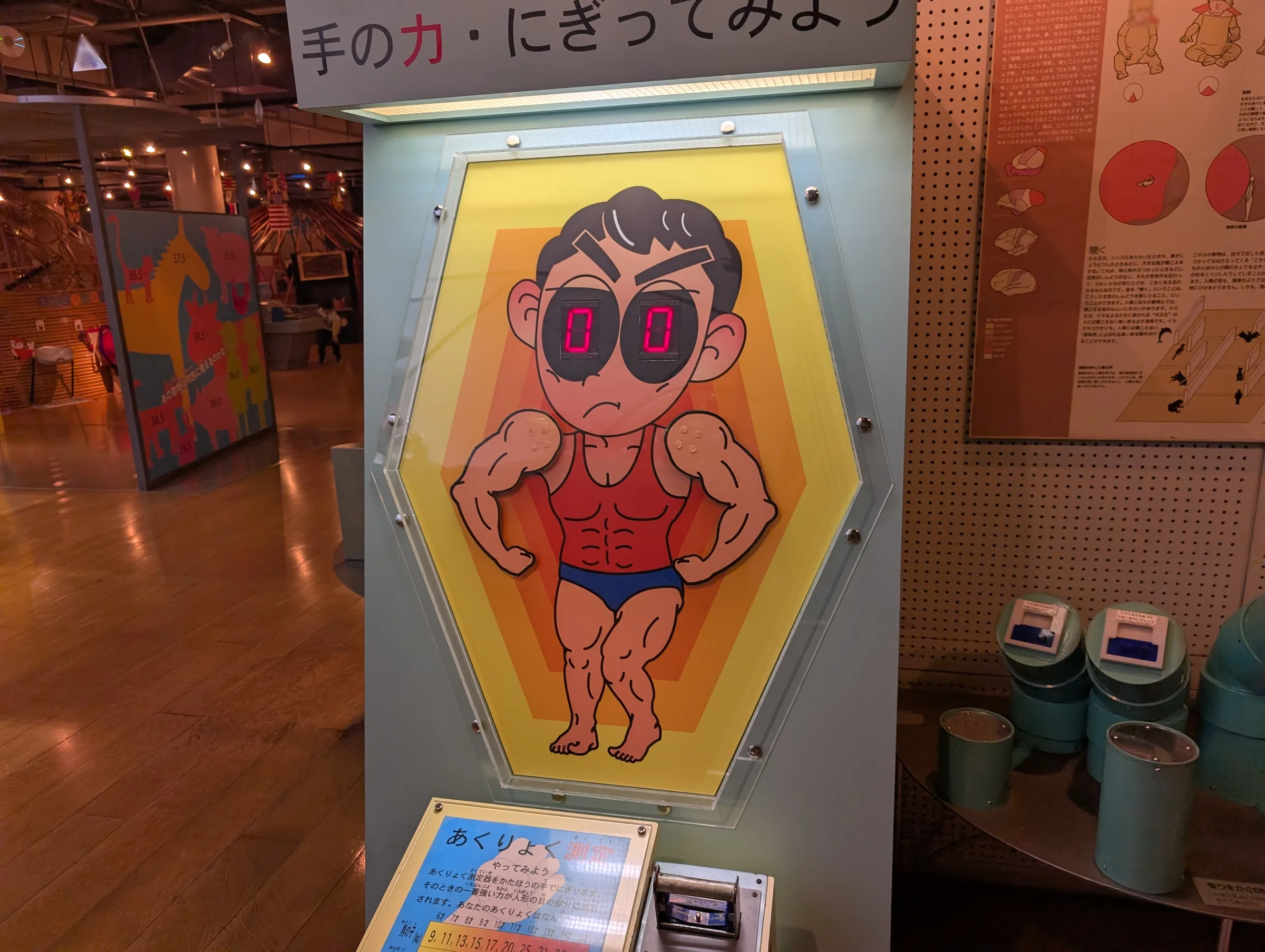
and a science corner where you generate electricity on a stationary bike — little hooks scattered around that keep stretching your stay. It doesn’t have the flashiness of the newest experience facilities, but if you’re a parent who loves “that nostalgic feel” of the children’s science centers you grew up with, this will land.
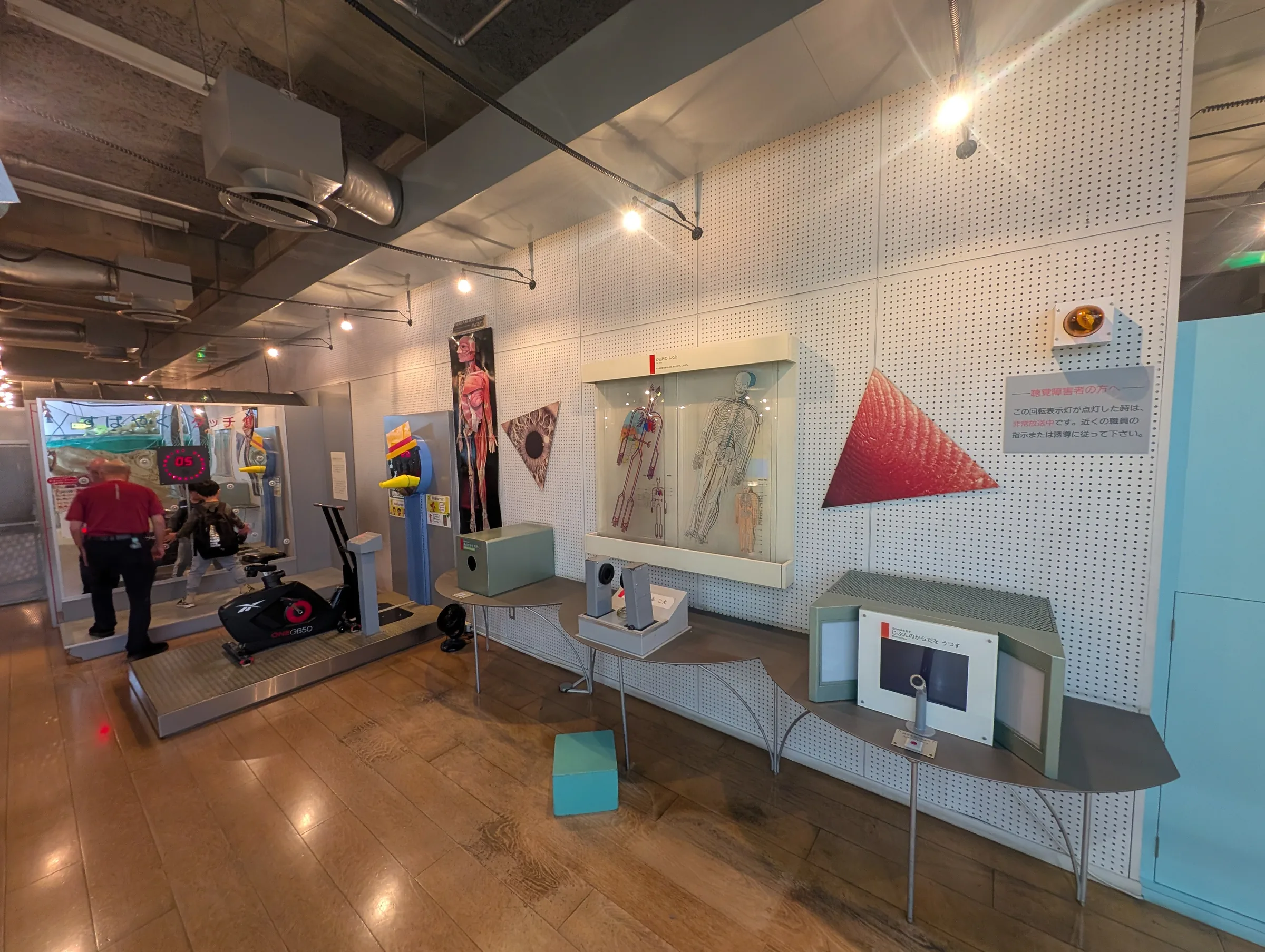
Honeycomb sculpture and play-kitchen
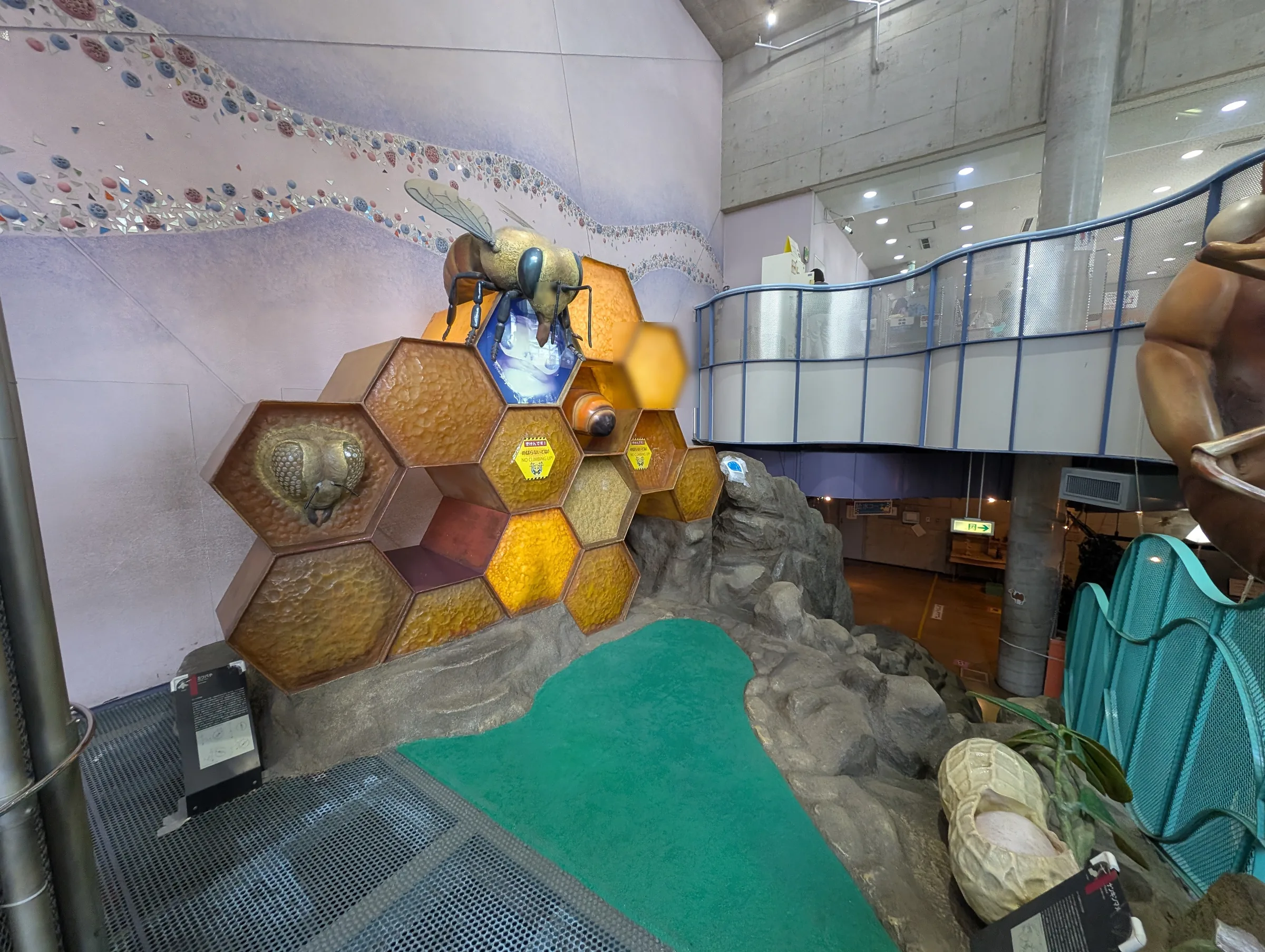
A sculpture shaped like a honeycomb. Looks cute too.
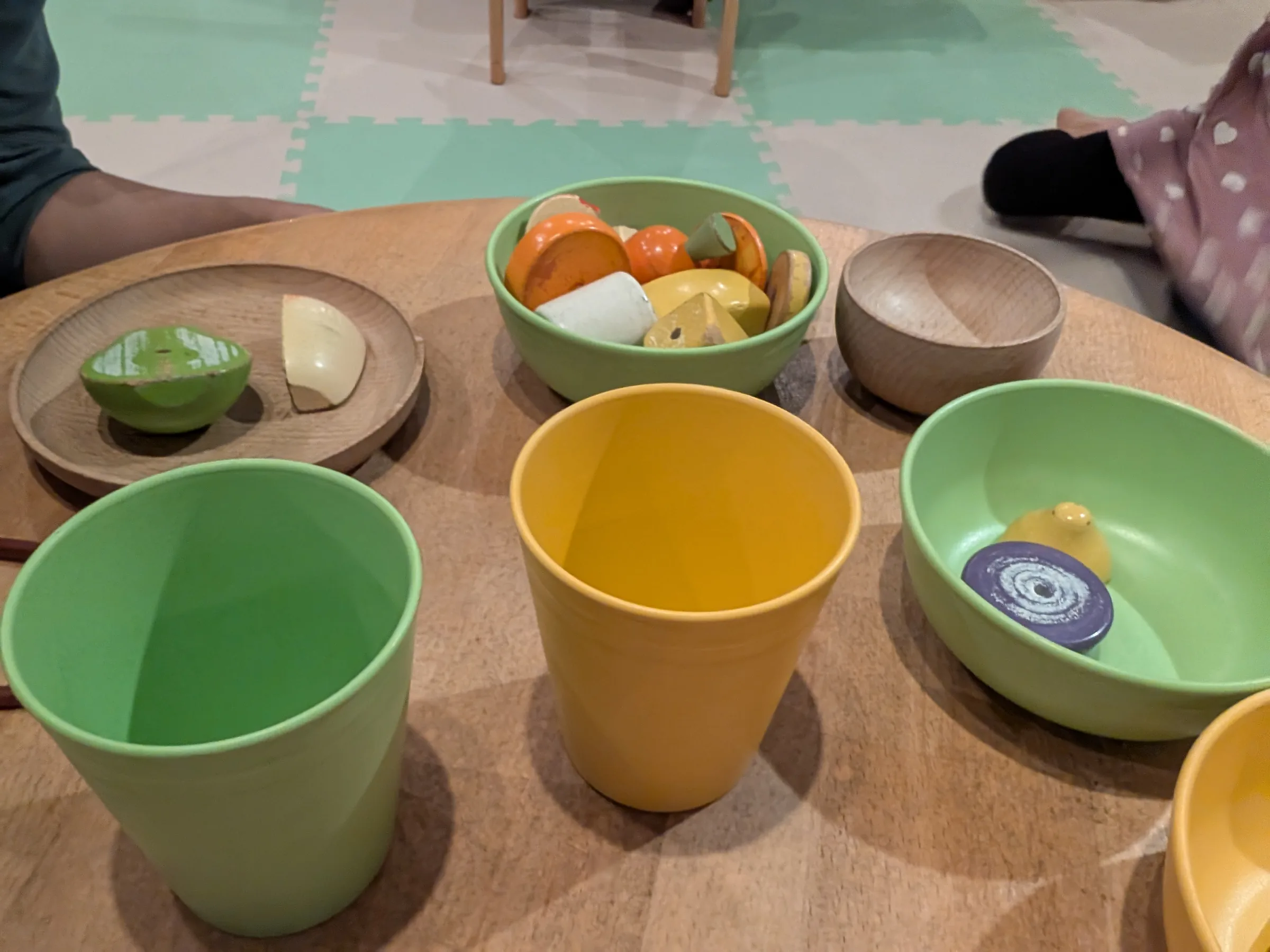
Another floor has a wooden play-kitchen set. Bowls, cups, fruit models — the full lineup is there, and plenty of kids sit down and silently start “making dinner.”
Honest take after visiting
As a whole, this isn’t the type of place competing on newness or polish. The building has a 90s feel to it, and the exhibits are a little worn. But the density you get for this admission price is remarkable. With recent price hikes, indoor play facilities usually cost over 1,000 yen per person, so being able to spend a half-day as a family for under 1,000 yen total is genuinely a relief for the wallet.
The planetarium is a separate fee (adults 500 yen, kids 200 yen), and I was curious about it too, but the timing didn’t work out that day. Next time I’ll come and pair it with the Space Theater. There’s underground parking too, so you can get there without getting wet even in the rain — a nice plus with kids.