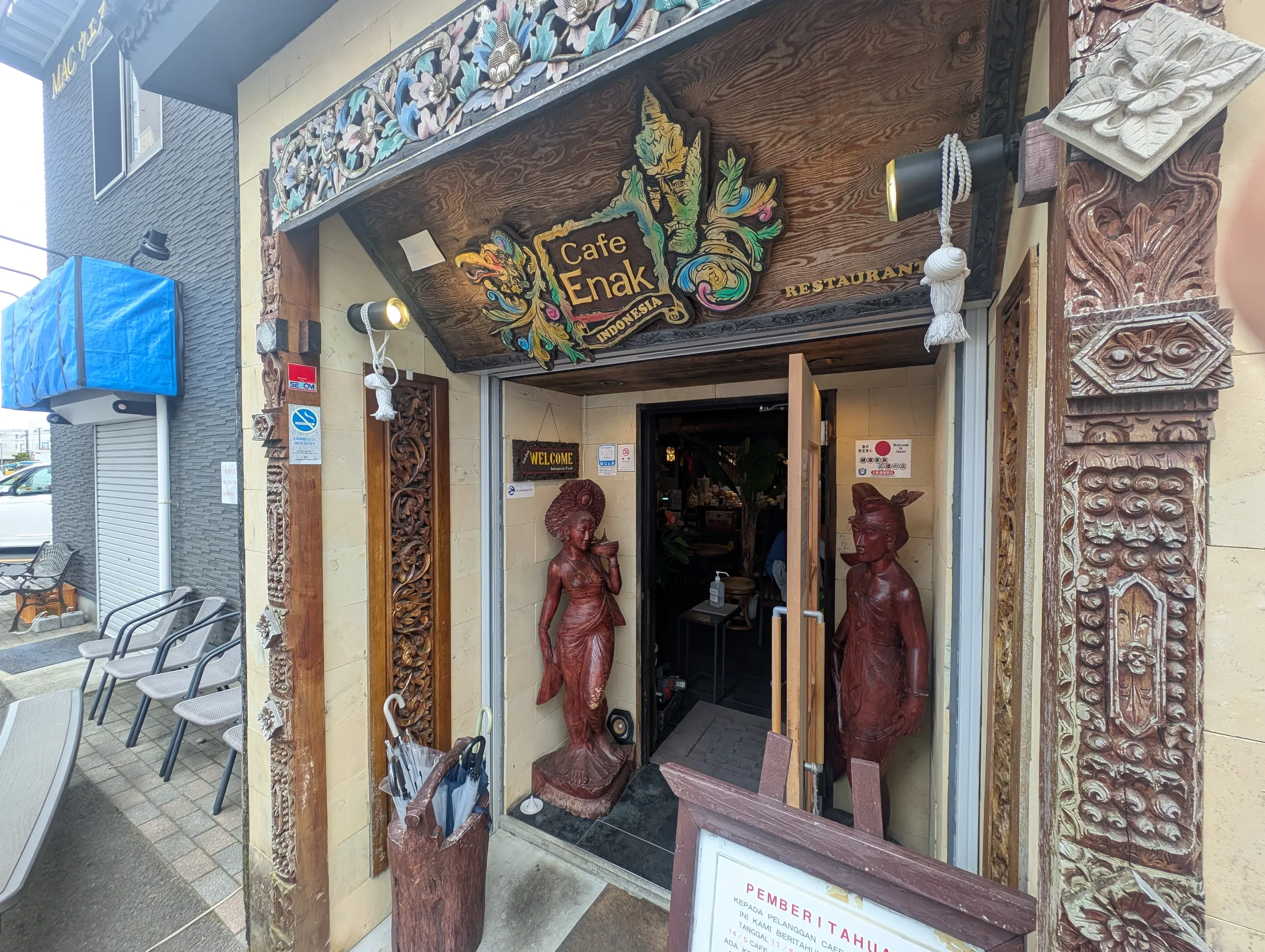
Authentic Indonesian at Cafe Enak, Right Outside Ebina Station
An Indonesian restaurant a one-minute walk from Ebina Station, where the air of Bali pours straight in. Sweet-sauced mie goreng, weekend-only nasi campur, and pisang goreng made with cooking bananas — all at a flat ¥1,000 lunch. The fiery sambal demands respect.
Information
- Area
- Ebina
- Address
- 14-11 Ogimachi, Ebina-shi, Kanagawa
- Access
- 1 min walk from Ebina Station West Exit
- Phone
- 046-210-3141
- Hours
- Tue–Fri 11:30–14:30 / 18:00–21:00, Sat/Sun/Hol 11:30–17:00 / 17:00–21:00
- Closed
- Mondays
- Budget
- Lunch ¥1,000 (coffee or tea included)
- Genre
- Indonesian cuisine
Step out of the West Exit of Ebina Station, slip off the rotary into a narrow side street, and you’re there. The first-floor entrance is marked by a tall wooden deity statue and an ornately carved Bali-style gate. The moment you spot the “Cafe Enak” sign, you already feel half-transported to Indonesia.
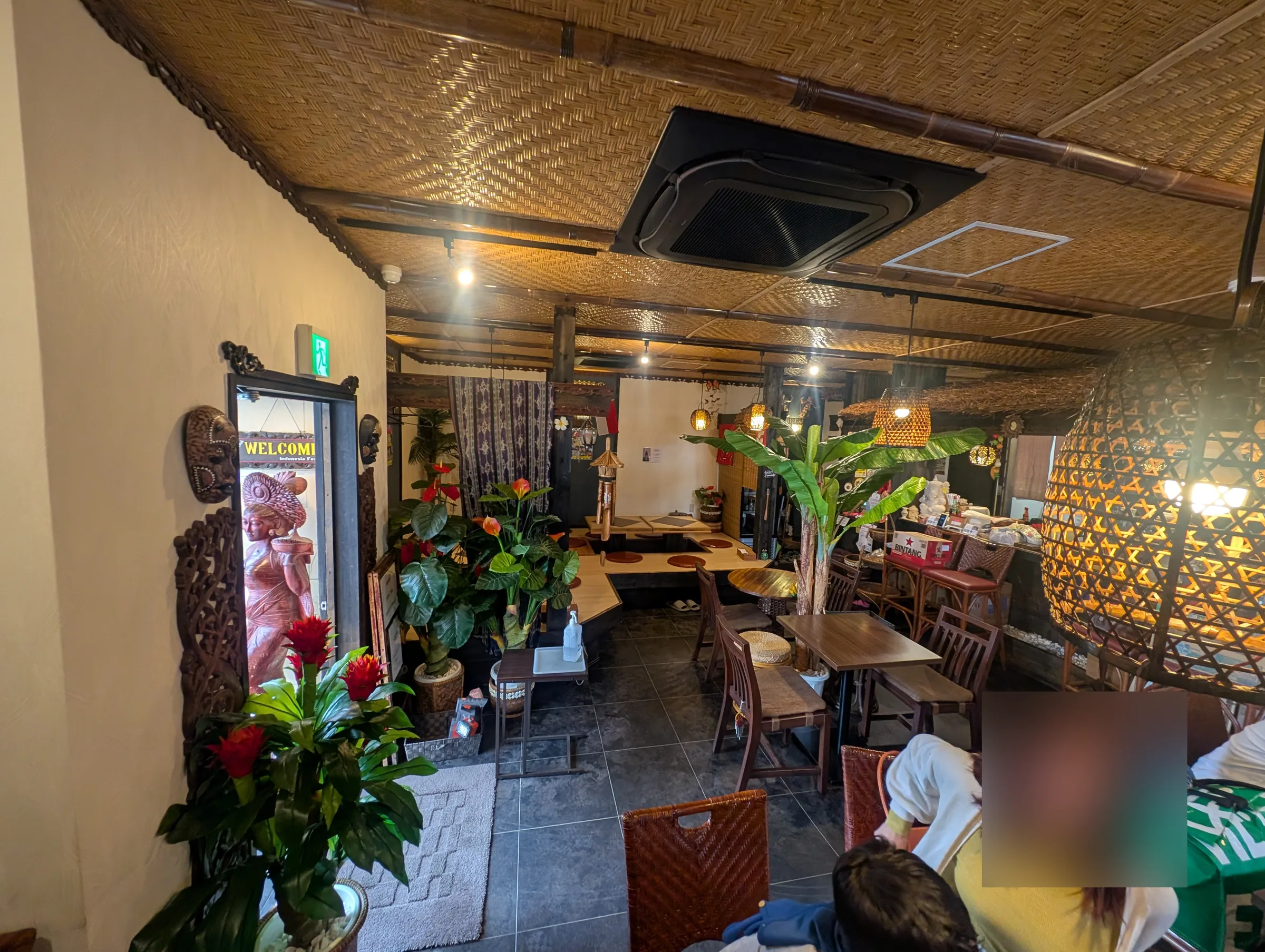
Inside, the ceiling is a woven bamboo lattice, leafy plants are tucked into every corner — it really does feel like a café tucked under the roots of a banyan tree. I went on a Saturday at lunch, and the place was packed. A few tables were taken by what looked like Indonesian regulars, which is usually a good sign that you’ve stumbled onto the real deal.
Lunch is a flat ¥1,000 — when in doubt, get the mie goreng
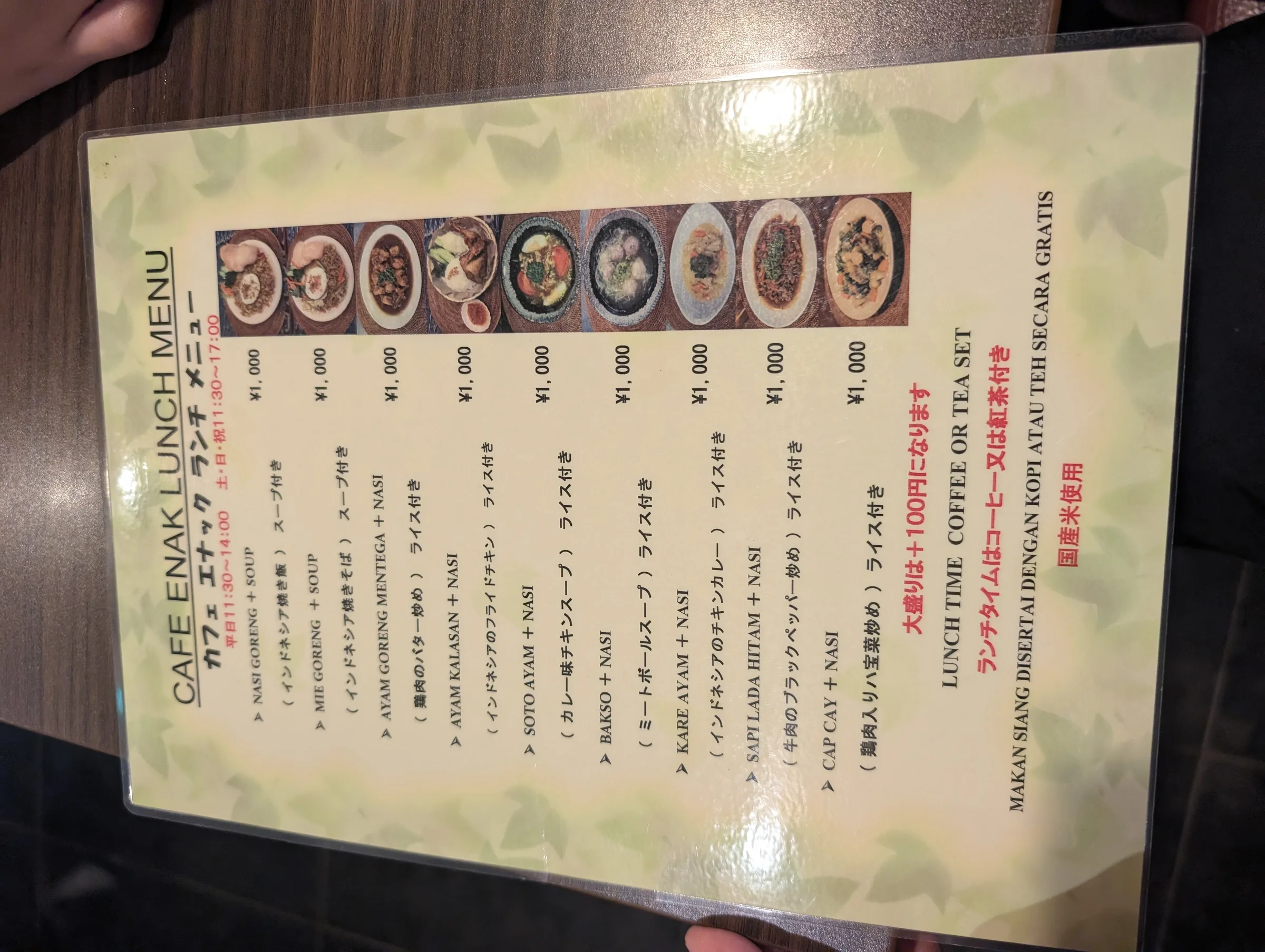
The lunch menu — nasi goreng, mie goreng, ayam goreng, a curry-flavored chicken soup, soto ayam, and more — is all priced at a flat ¥1,000, with soup or rice and coffee or tea included. They even note that they use rice from Indonesia. For the price, this is honestly trying way too hard in the best way.
I ordered the Indonesian fried noodles, mie goreng.
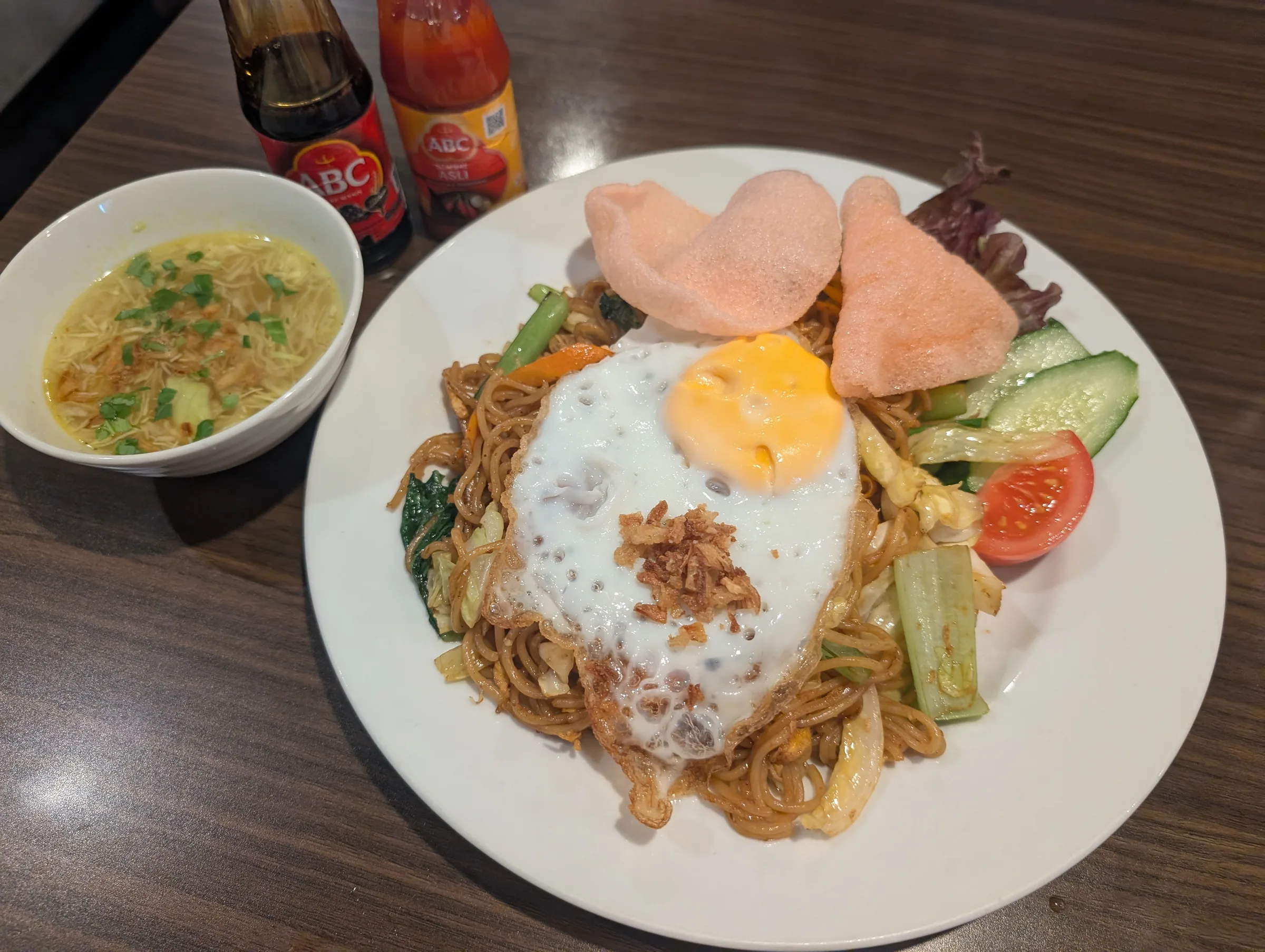
The plate arrived with a crisp-fried egg perched on top of the noodles, pink krupuk (shrimp crackers) on the side, fresh tomato and cucumber. The sauce leans toward kecap manis (sweet Indonesian soy), giving it a deep, almost-yakisoba feel — but with a fermented, fish-sauce echo lingering in the aftertaste. Heat level is essentially zero, so people who shy away from ethnic food, and even kids, can dig in without hesitation. The table has ABC sweet soy and a hot chili sauce so you can mess with the flavor as you go. The accompanying soto-ayam-style soup, with its turmeric-yellow broth and rich chicken depth, was good enough that I wanted a second bowl on its own.
The weekend-only nasi campur is the real Indonesian deal
The other thing I’d come for that day was the weekend-only, limited-quantity “nasi campur” — the classic Indonesian rice-shop format where rice is served with several side dishes arranged around it.
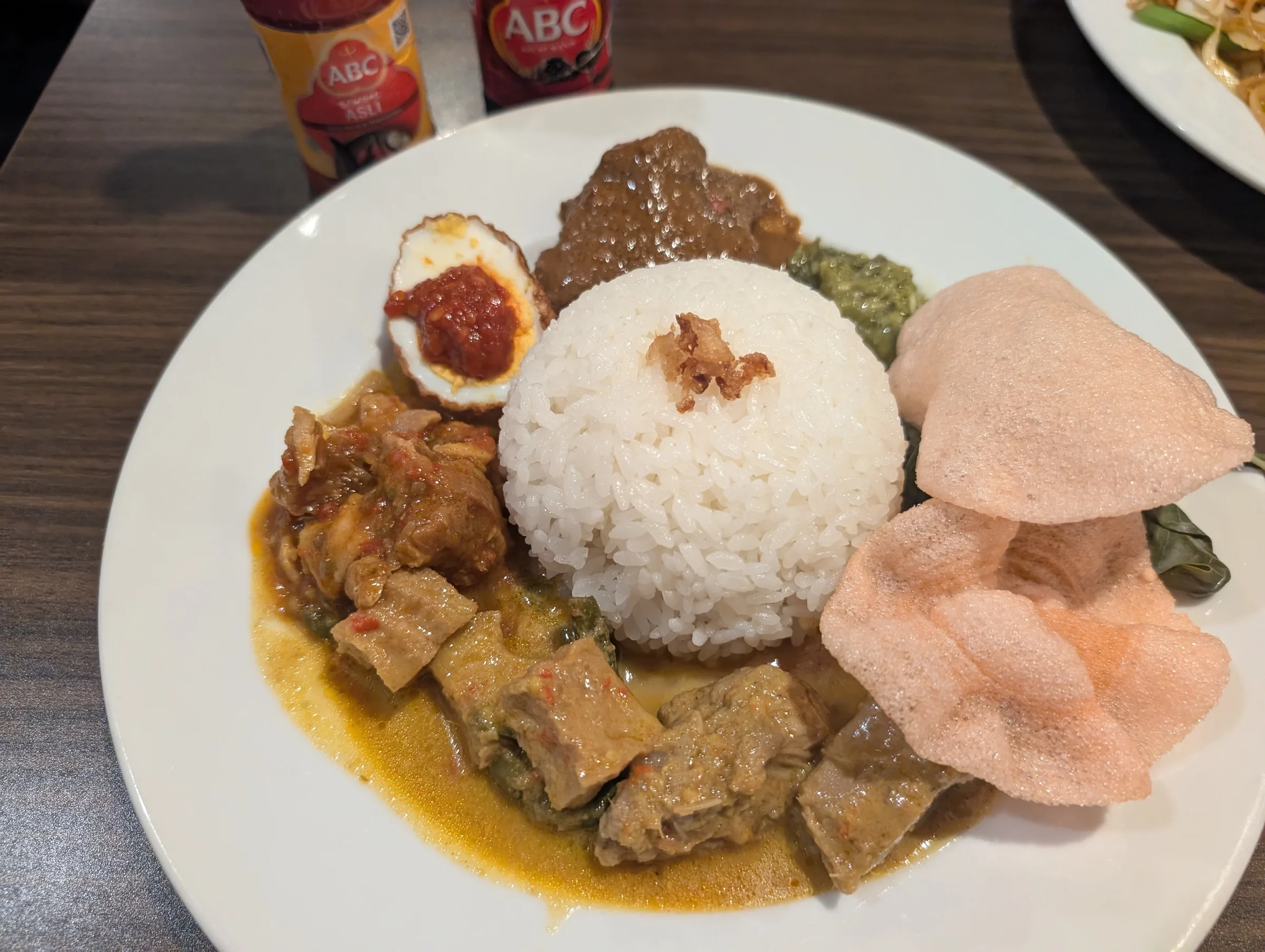
Around the central mound of rice: a rendang-style braised beef, chicken tossed in a green-chili sambal, a coconut-rich curry, an egg blanketed in sambal, and an airy fried krupuk. Each item uses its own spice blend, and a single plate feels like a tour of Indonesia’s flavor map. There aren’t many places in Japan that put this many distinct spice-cooked items on one plate at once — that alone makes it worth seeking out.
That said, the green-and-red chili sambal tucked at the back-left of the plate is genuinely fiery. I took an unsuspecting bite and couldn’t put my water glass down for a while. If you’re not into heat, just leave it alone, or break off the tiniest sliver and stir it into the rice. Chili lovers, on the other hand, can pile it on the rest and grin through the burn.
Closing with pisang goreng — crunchy outside, custard-soft inside
For dessert I went with pisang goreng (fried banana) with vanilla ice cream and chocolate sauce.

This turned out to be the sleeper hit of the meal. They use cooking bananas (plantains) rather than the sweet eating bananas you find at Japanese supermarkets — the batter is thin and shatter-crisp, while the inside melts under the heat into something more like custard cream. It’s a completely different beast from the snappy bite of a deep-fried regular banana — this dish alone is reason enough to come. The contrast of cold ice cream against the piping-hot banana is a nice touch.
A few things to know before you go
Weekend lunchtimes are genuinely packed. I get the impulse to linger and soak up the Bali vibes, but assume there are people waiting and pace yourself accordingly. The nasi campur runs out — if you’re chasing it on a weekend, the safest move is to walk in right around the 11:30 opening. They’re closed Mondays, and on some days there’s a break between lunch and dinner service, so check the hours before going for an evening visit.
When you want a lunch in Ebina that isn’t a family restaurant or a chain, you can pop through a small door a minute from the station and teleport straight to Bali. As a place to keep coming back to, this one feels like it’ll be in the rotation for a while.