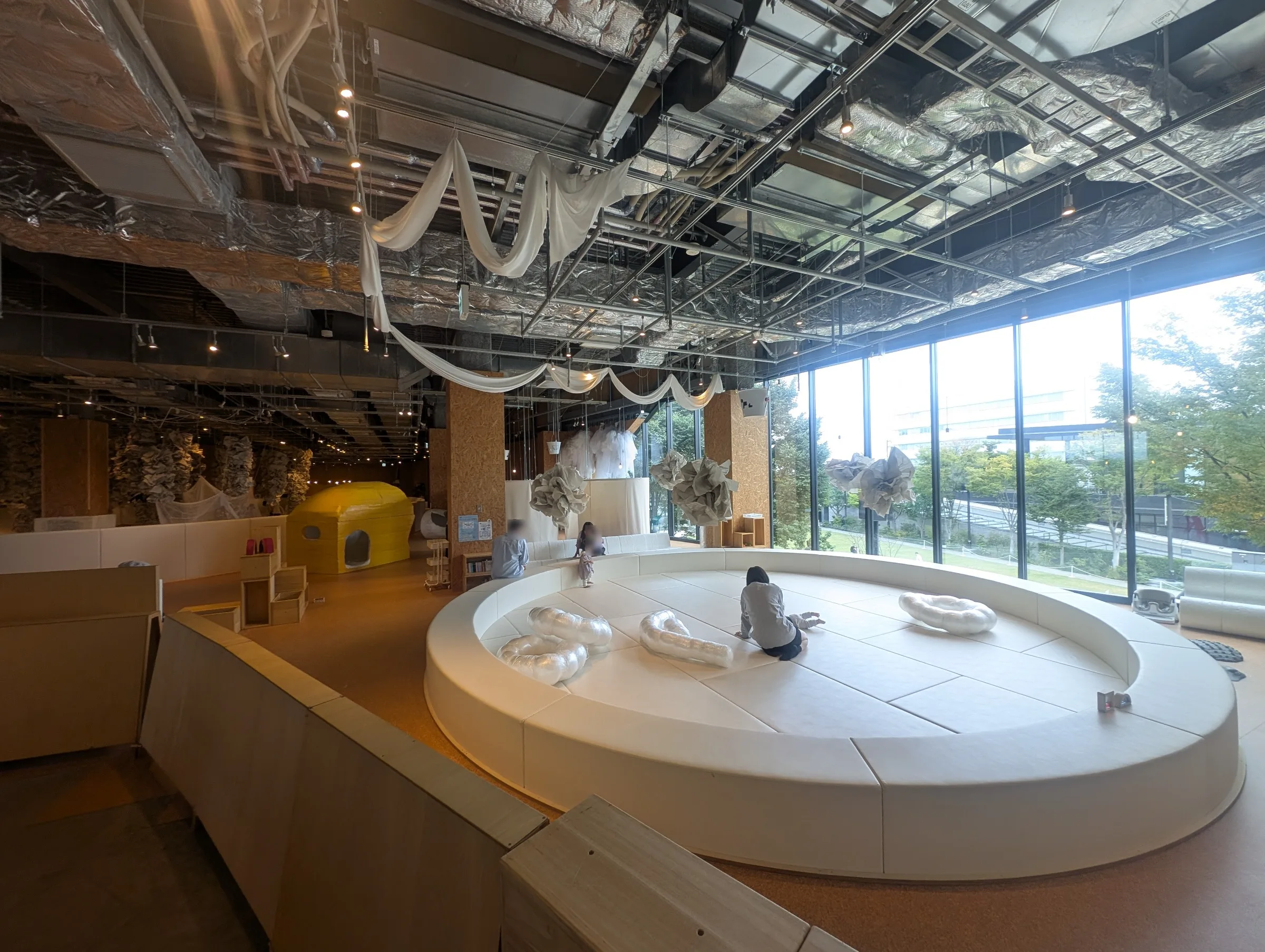
PLAY! PARK (Tachikawa, GREEN SPRINGS)
PLAY! PARK is an indoor play space inside Tachikawa's GREEN SPRINGS. Rather than a room full of toys, it leans toward art, with crafts, paints, and giant paper installations to play with freely. Even elementary schoolers who have outgrown regular playgrounds got completely absorbed.
Information
- Area
- Tachikawa
- Address
- GREEN SPRINGS W3 Building 2F & 3F, 3-1 Midoricho, Tachikawa-shi, Tokyo
- Access
- About a 10-minute walk from JR Tachikawa Station (North Exit) or Tama Monorail Tachikawa-Kita Station
- Phone
- 042-518-9627
- Hours
- Weekdays 10:00–17:00 (last entry 16:00) / Weekends & holidays 10:00–18:00 (last entry 17:00)
- Closed
- Generally open daily (except during exhibition changeovers and the New Year holidays)
- Budget
- Weekday 1-day pass: adults ¥1,100 / children (3–12) ¥2,200 / ages 1–2 ¥1,700. Weekend & holiday 1-day pass: adults ¥1,500 / children ¥2,500 / ages 1–2 ¥2,000. Under 1 free; 3-hour passes available on weekends and holidays
- Official site
- https://play2020.jp/park/
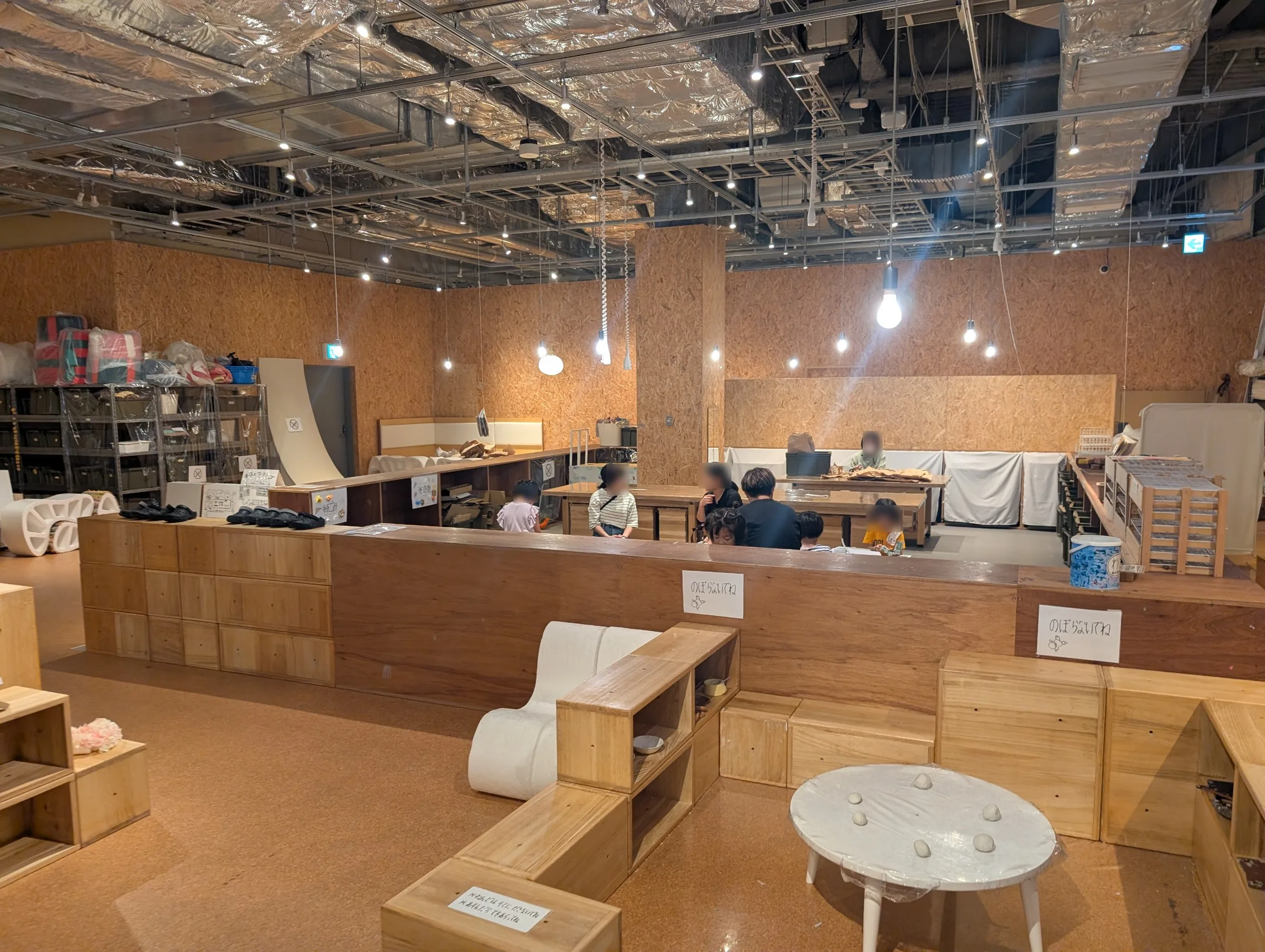
I visited PLAY! PARK, tucked into a corner of GREEN SPRINGS on the north side of Tachikawa Station. When you hear “indoor playground,” you probably picture ball pits, big play structures, and a kids’ space lined with toys, but this place is quite a different animal. It’s much more rooted in art and design, and the line between “playing” and “making” stays blurry, so kids end up discovering their own ways to play.
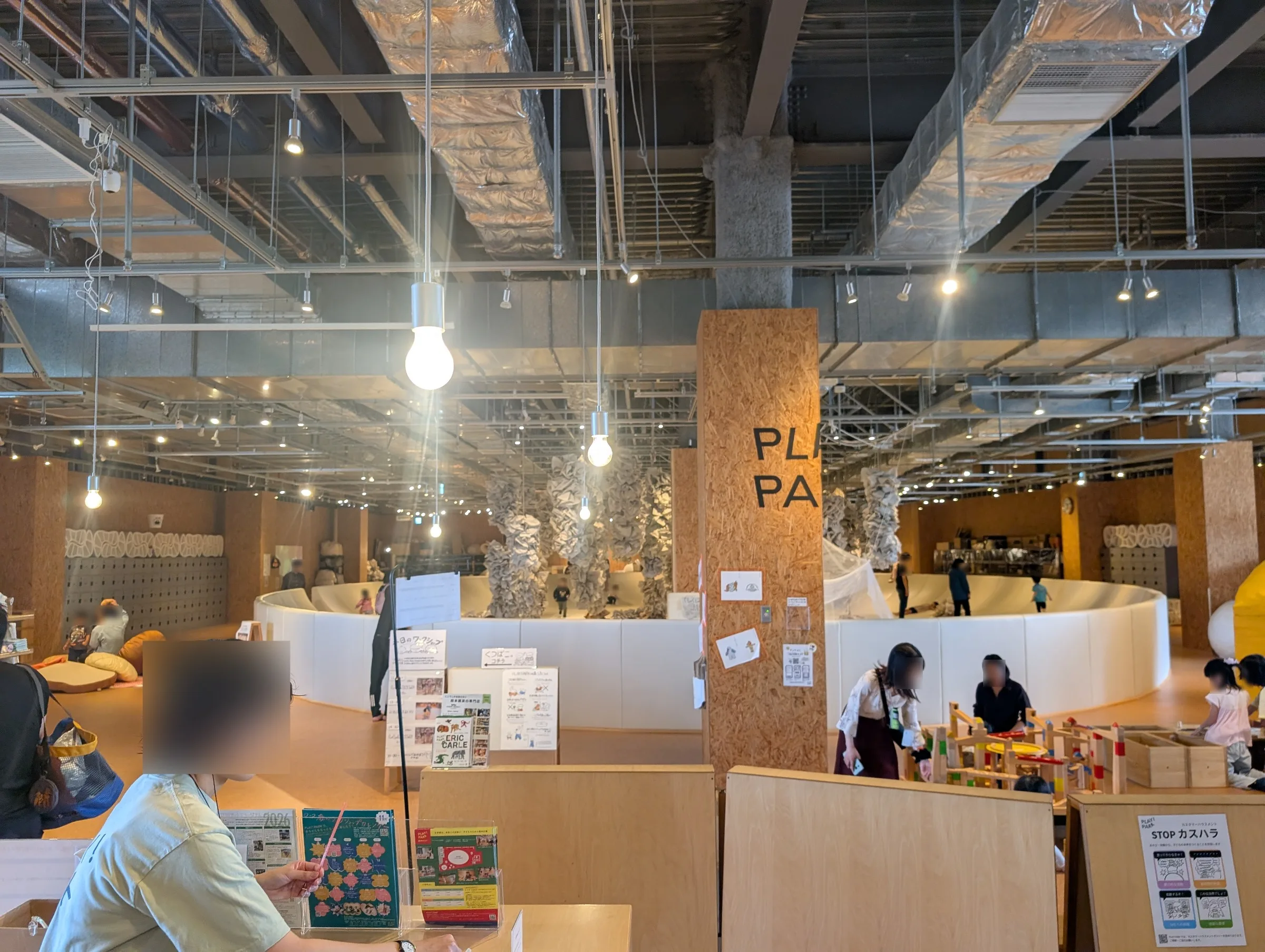
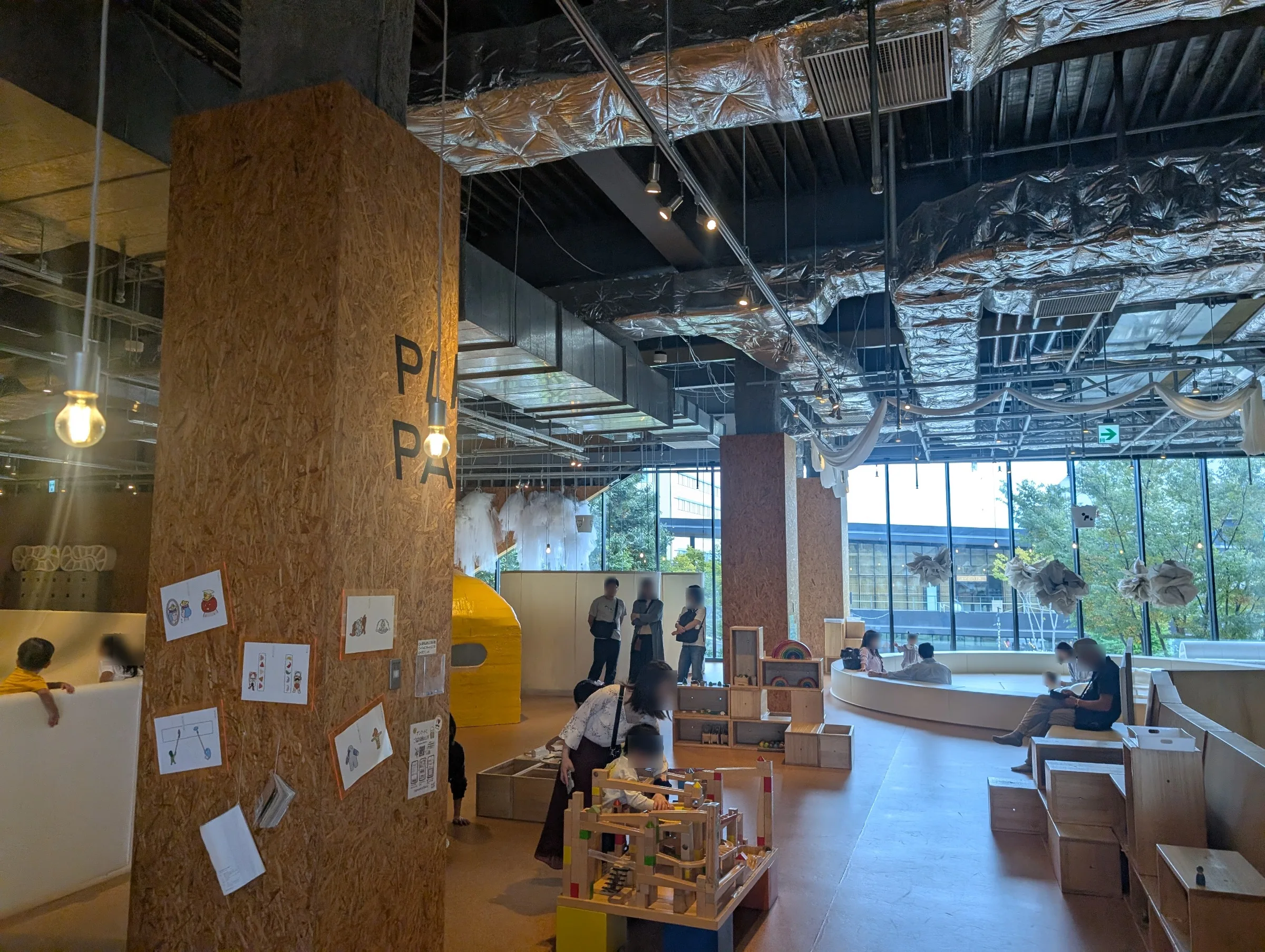
The ceiling has exposed ducts and pipes, and the walls are boards made of pressed wood chips, giving it the feel of an atelier in a converted warehouse. Big windows look out over the park’s greenery, so it doesn’t feel cramped even though it’s indoors. Personally, my favorite thing about it is that kids who’ve gotten bored of ordinary playgrounds, and even upper elementary schoolers, can genuinely enjoy themselves here.
Parking at IKEA was the right call
Let’s start with the practical stuff. PLAY! PARK has no dedicated parking, so you’d use the GREEN SPRINGS lot, but honestly, it’s pretty expensive.
So this time we parked at the nearby IKEA Tachikawa and walked over. Even on weekends, if you buy ¥1,000 or more at IKEA on the way back, parking is free. Just to be safe, I asked an IKEA staff member whether using it this way was okay, and they said it was no problem. If your family is going to pick something up at IKEA anyway, I think this is the smartest route.
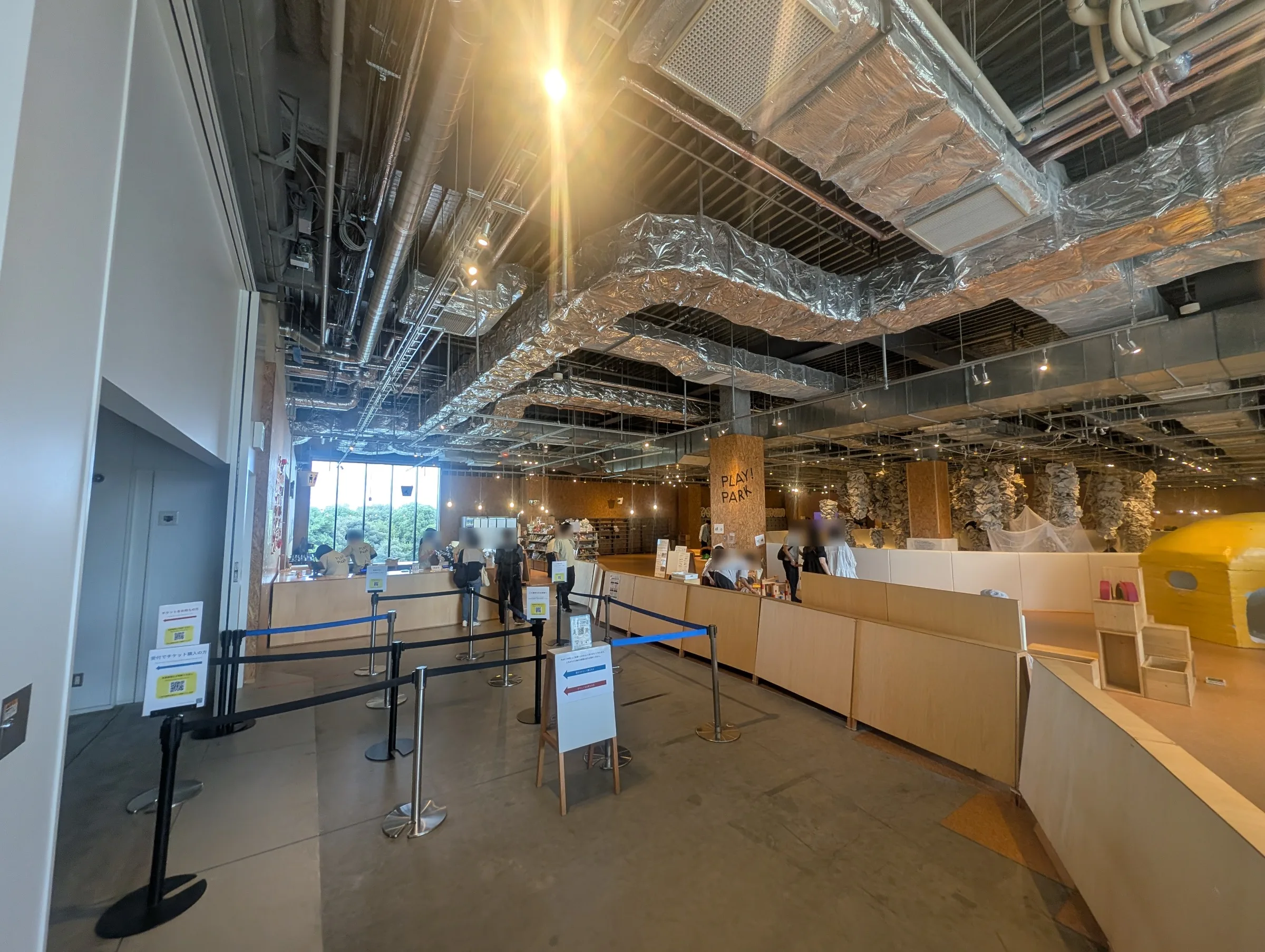
There’s a large stroller parking area at the entrance, so you can leave your stroller there before heading in. It was smooth sailing even with little ones.
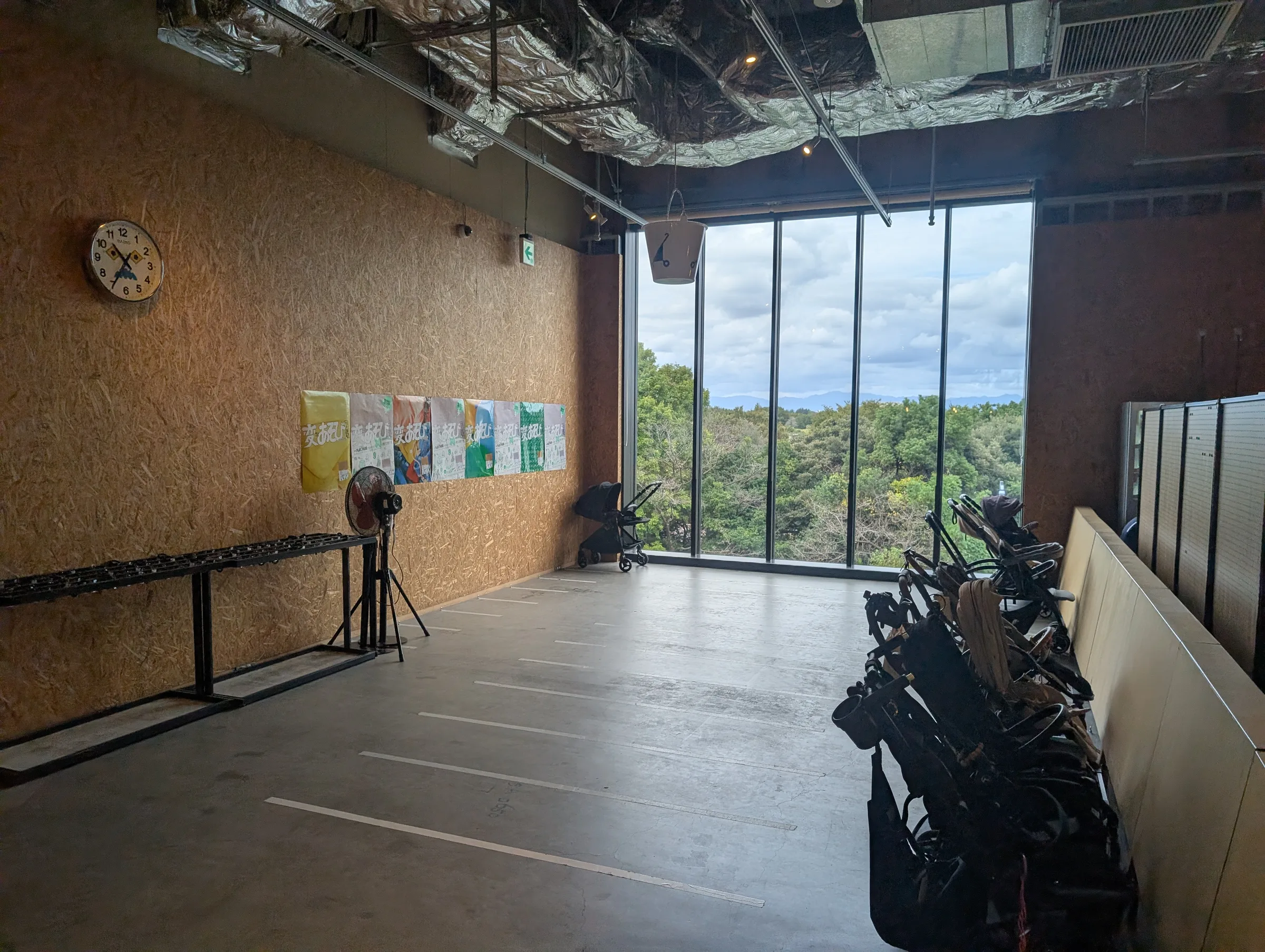
Near the entrance there’s also a shop and vending machines. The shop stocks picture books, educational toys, and knick-knacks, and kids get pulled toward it on the way out, so be warned (lol).
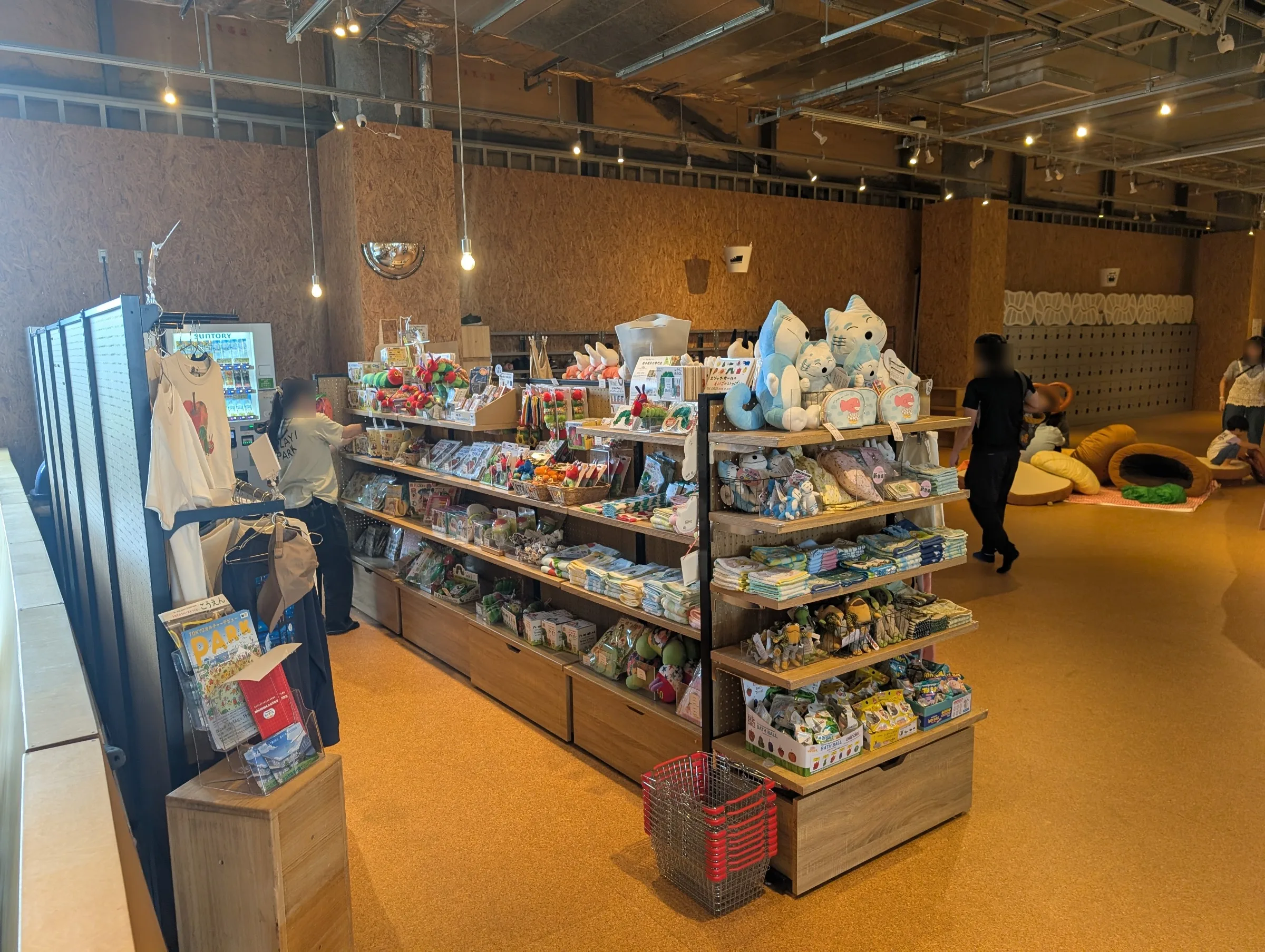
Baby area and wooden toy corner
There’s an area for babies too, with a nursing space and a diaper-changing area. It’s a big help to be able to let the younger one play safely while the older one is absorbed in crafts.
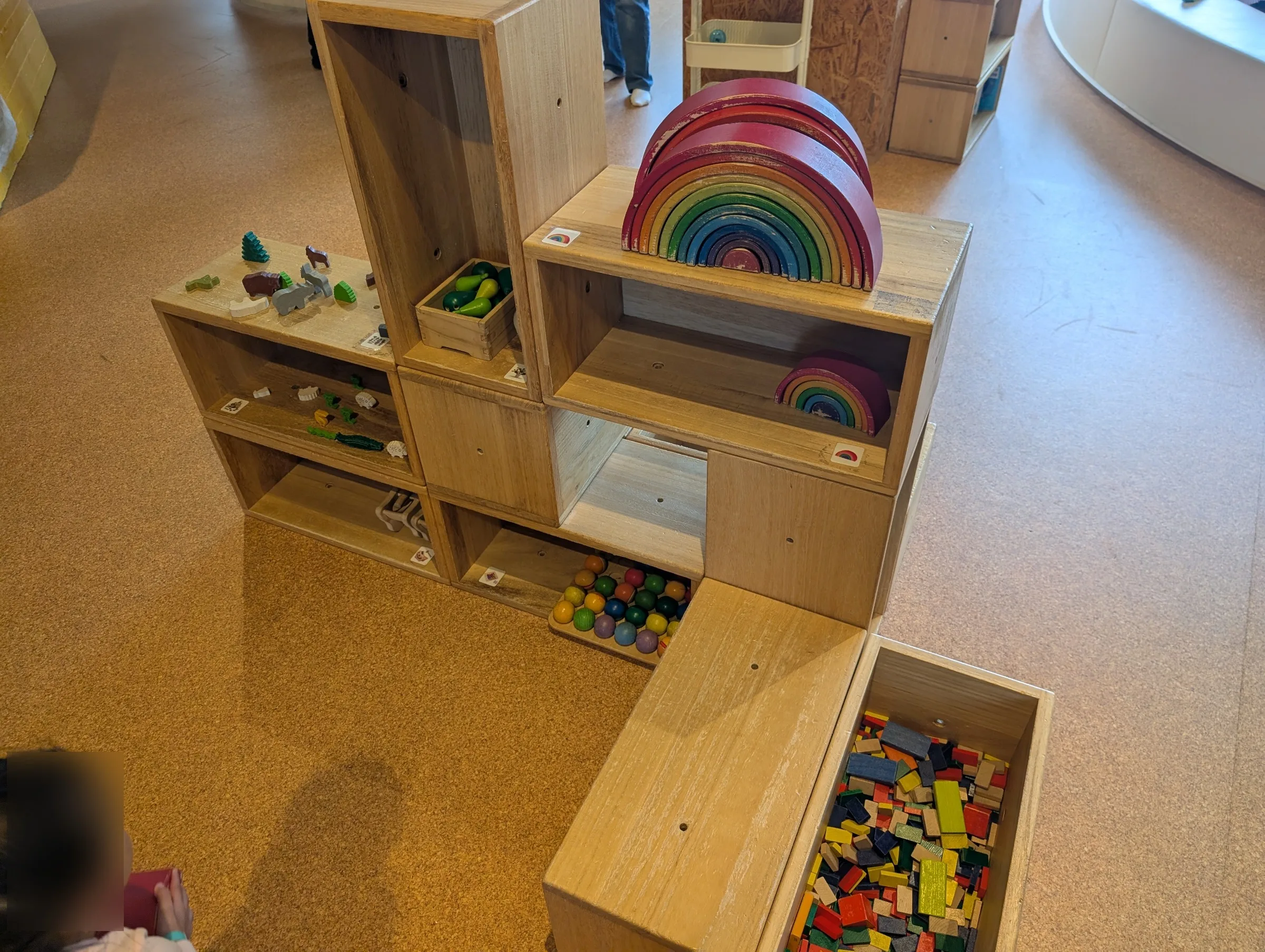
There’s also a corner with wooden toys and building blocks — plenty of rainbow-colored arch blocks and colorful wooden pieces.
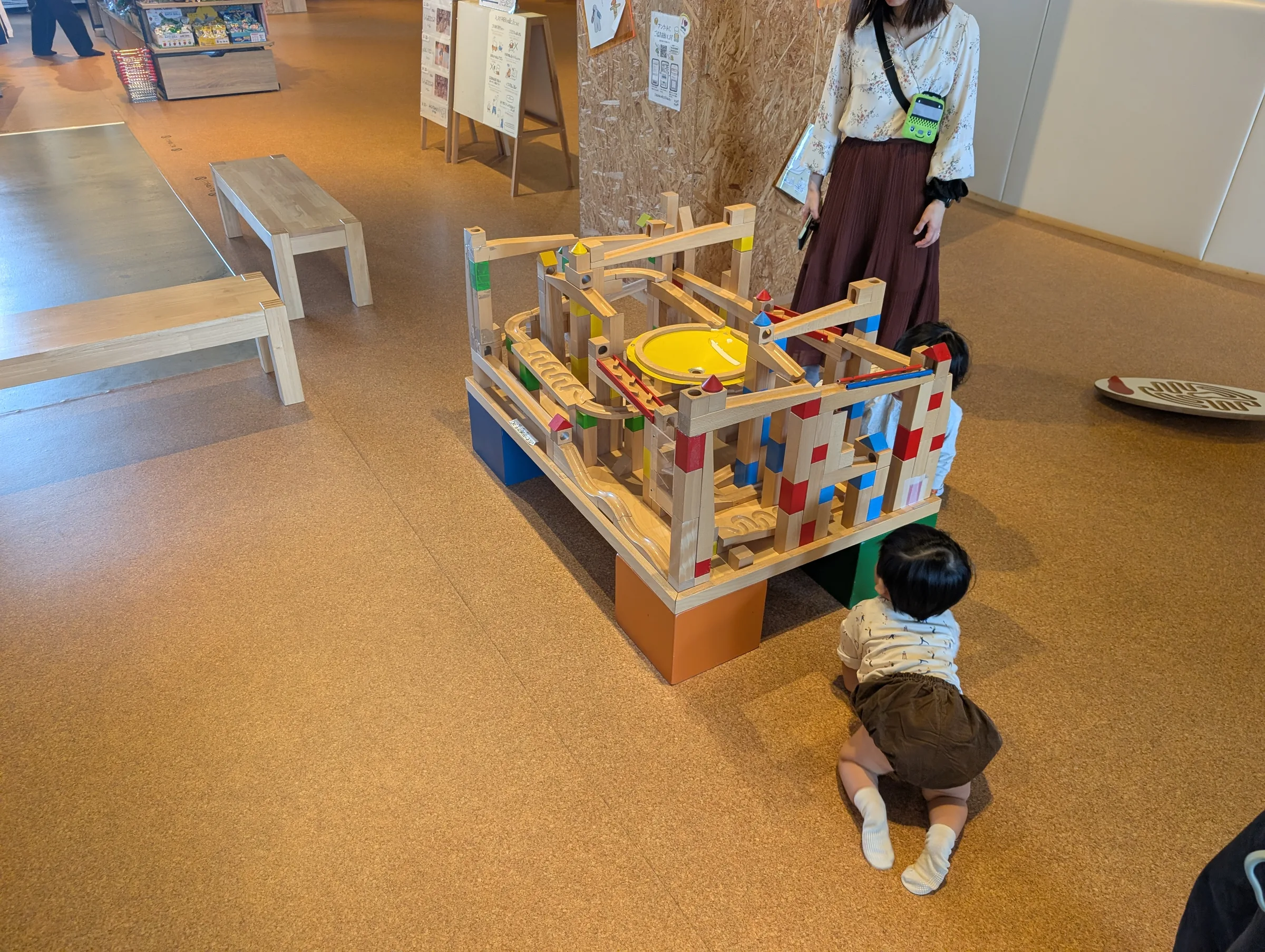
There was also a big marble-run-style toy built into a wooden frame, and the little kids were glued to it the whole time.
The central “Osara” (the Plate) and the Kusha-Kusha Ghosts
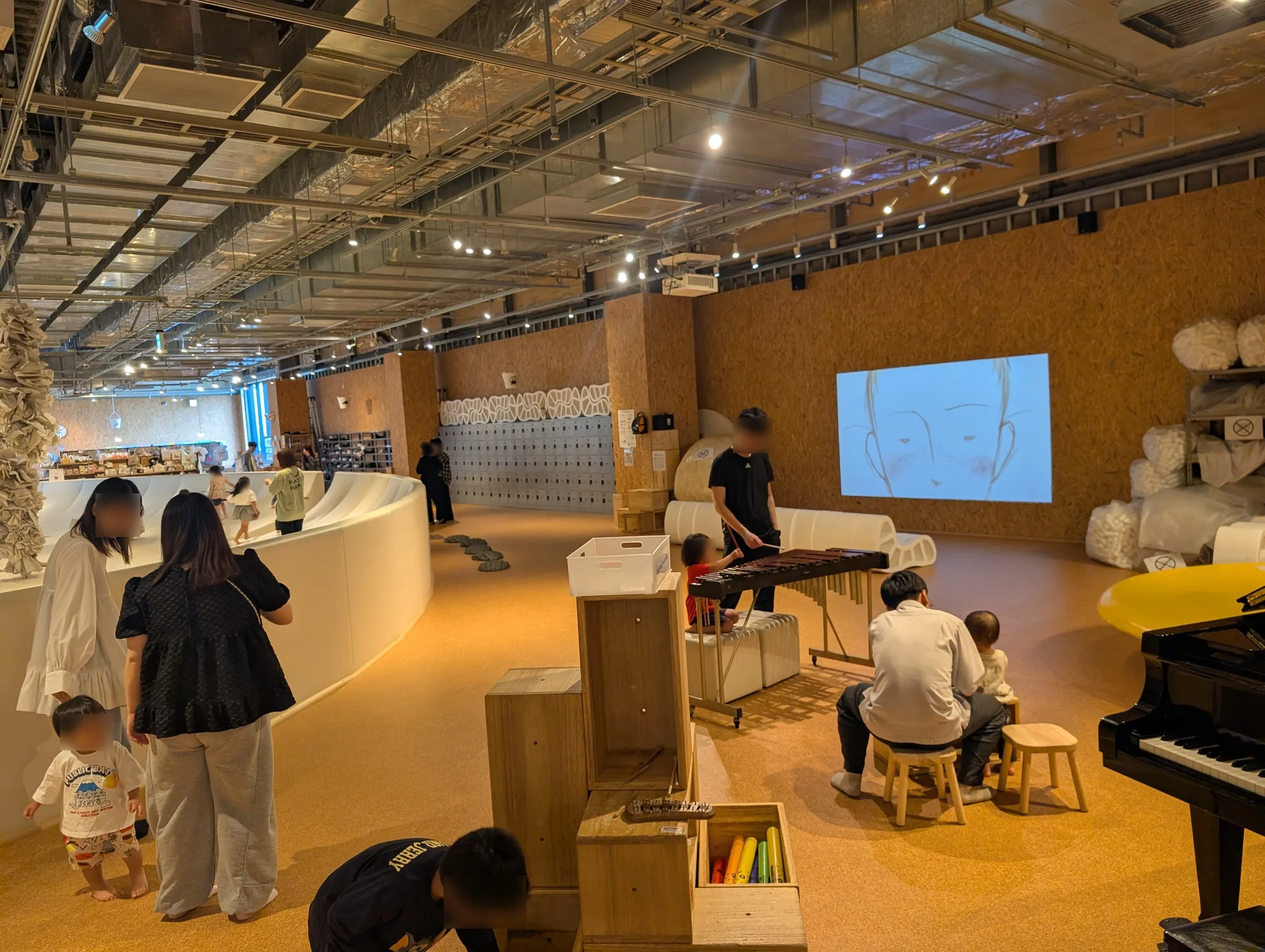
The most fun part of the whole place was the circular area in the middle called the “Osara” (the Plate). It’s shaped like a big white plate, and it hosts limited-time play installations with different concepts.
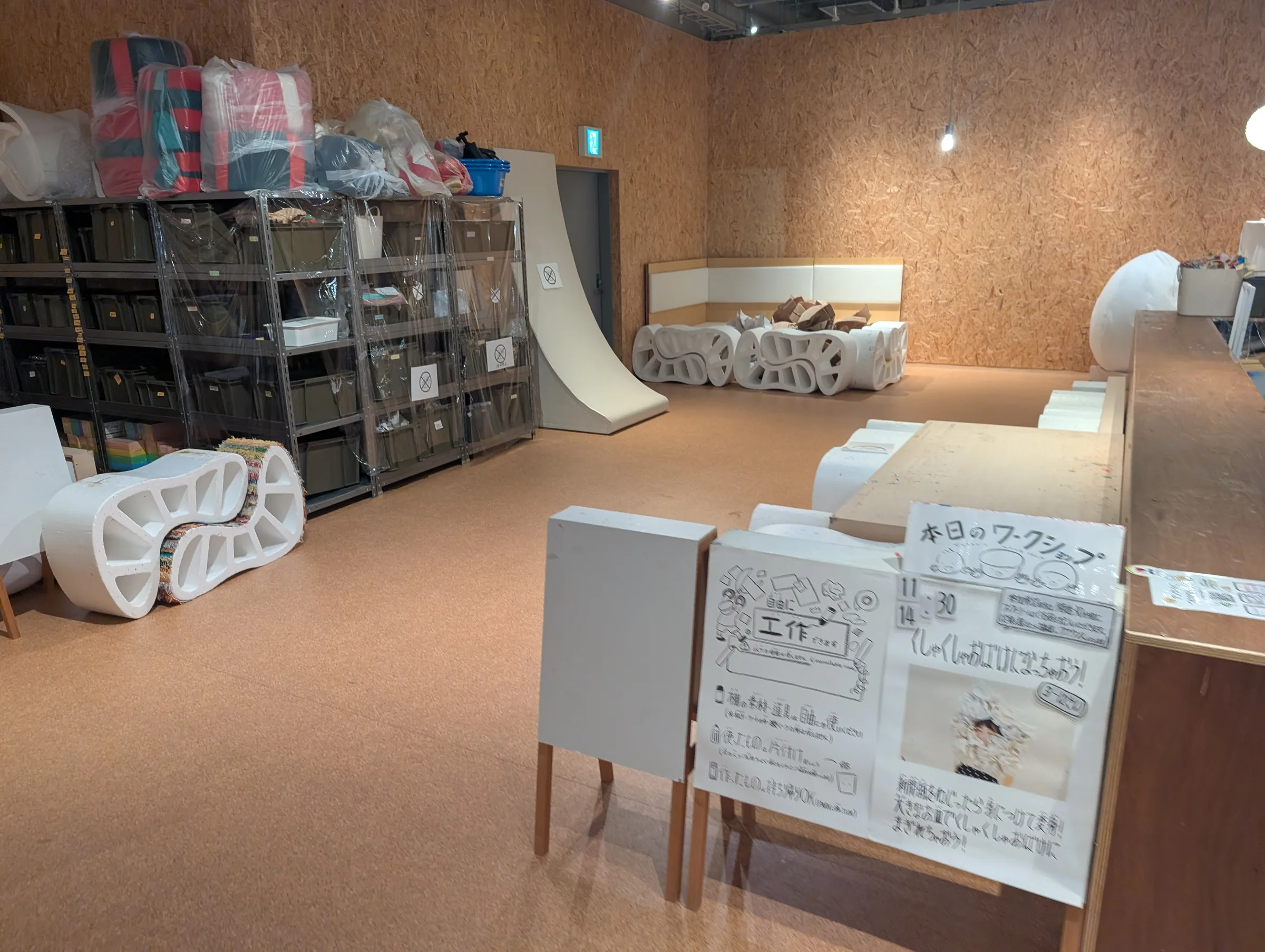
This time it was “Kusha-Kusha Obake” — the Crumpled Ghosts. Crumpled-up paper hangs from the ceiling like pillars, and you’re allowed to tear it, climb on it, or hang from it like a swing. The only rule is that anything goes.
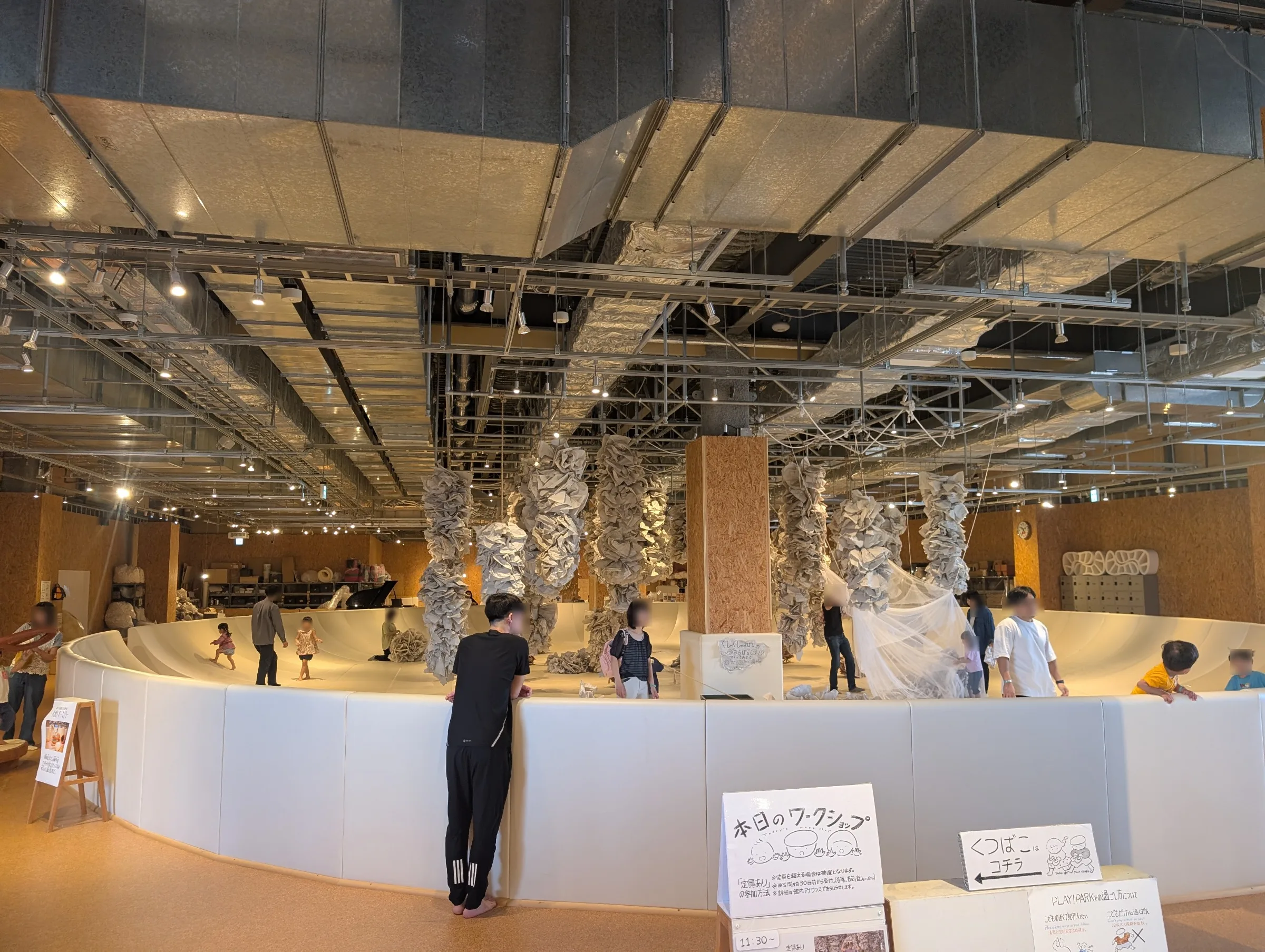
At first I was skeptical — “they just play with paper?” — but it’s surprisingly fun. Kids love the ripping sound of tearing paper and the feeling of leaning their whole body into a crumpled mass. What stuck with me was that it wasn’t just the kids: the grown-ups were playing right alongside them. I like that it’s not just a place where parents stand and watch.
Unlimited materials and paint in the craft room
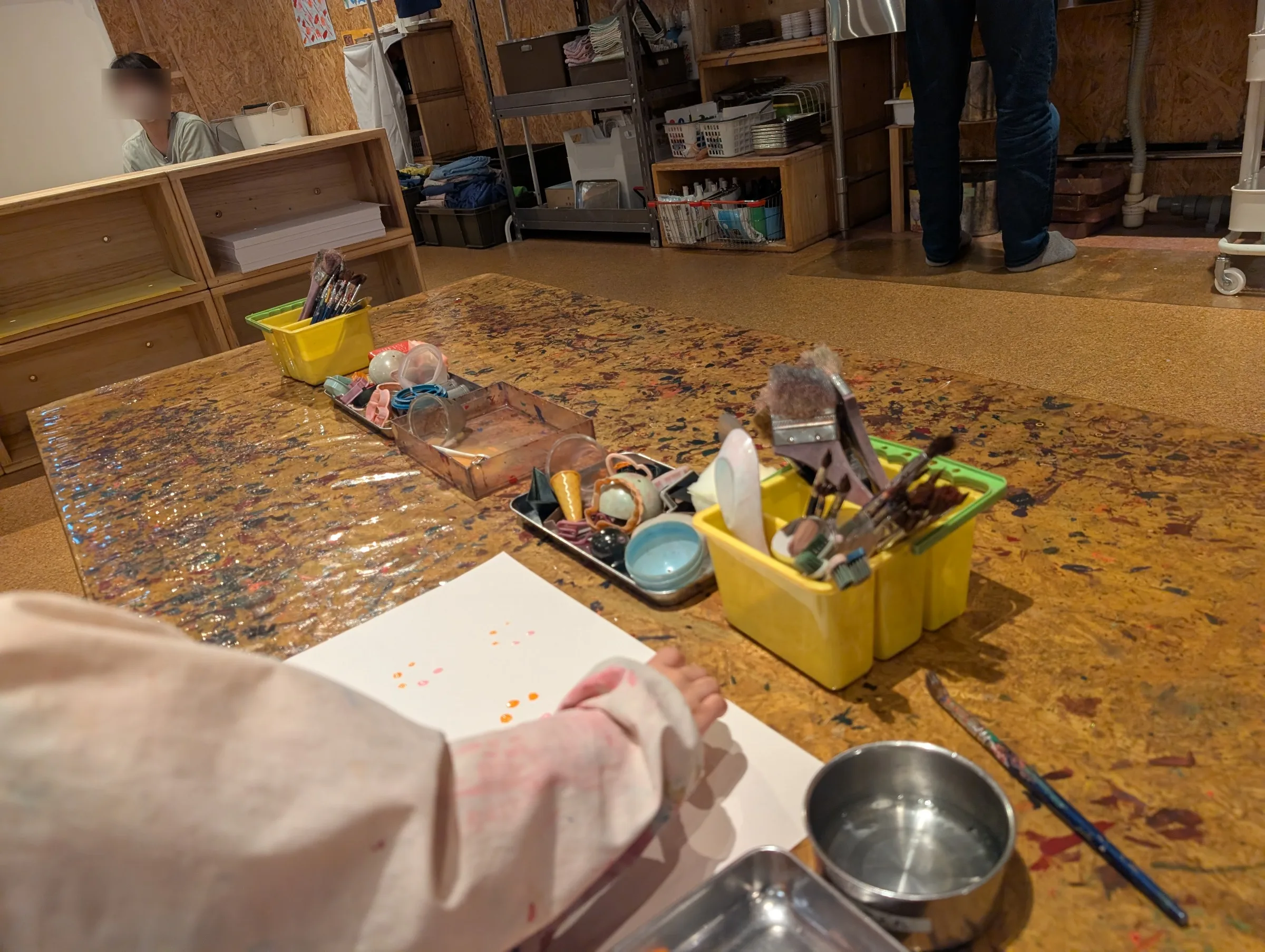
At most play spaces, craft and painting workshops cost extra, but here it’s all-you-can-play with your admission. That’s a really big deal.
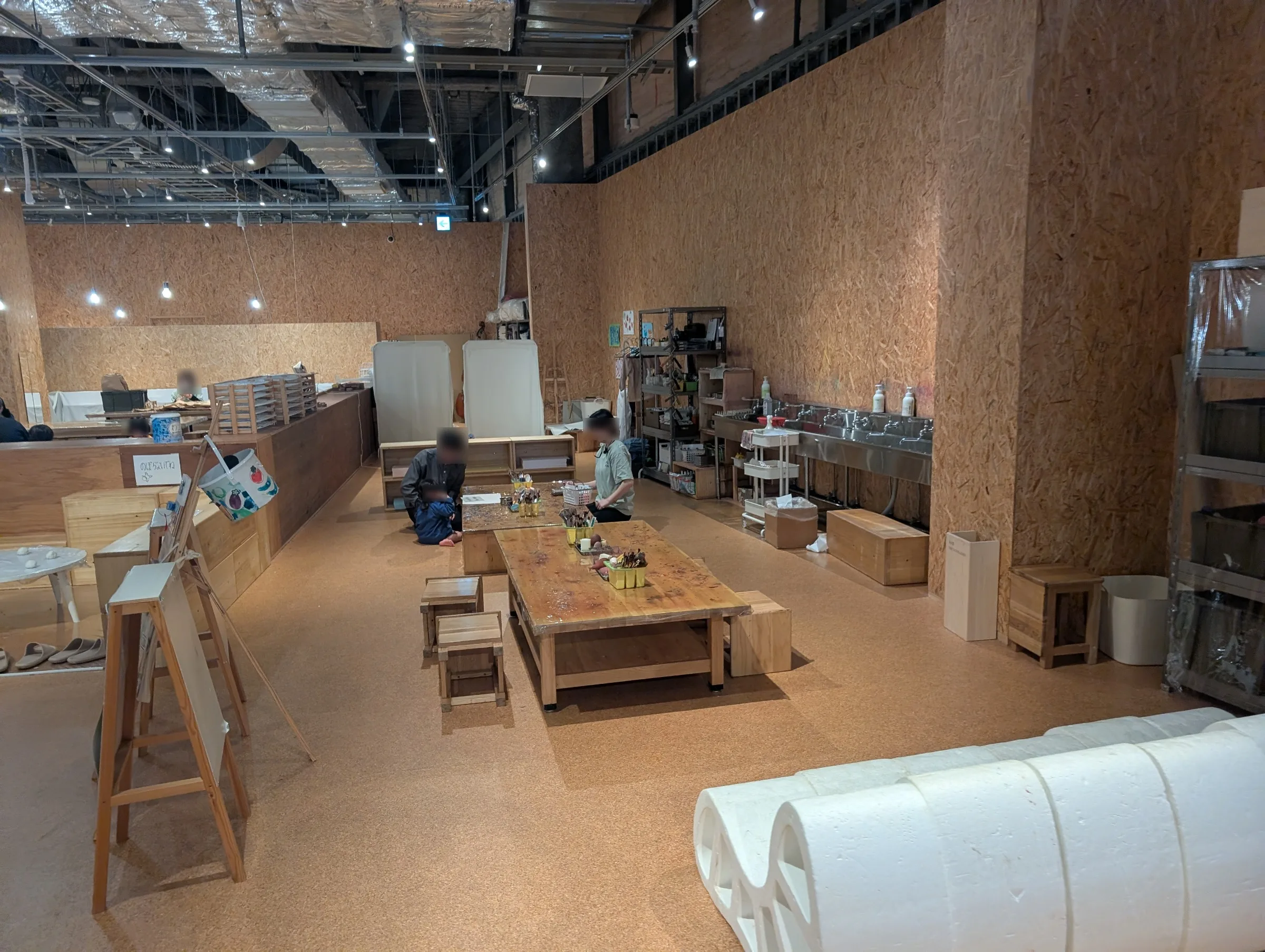
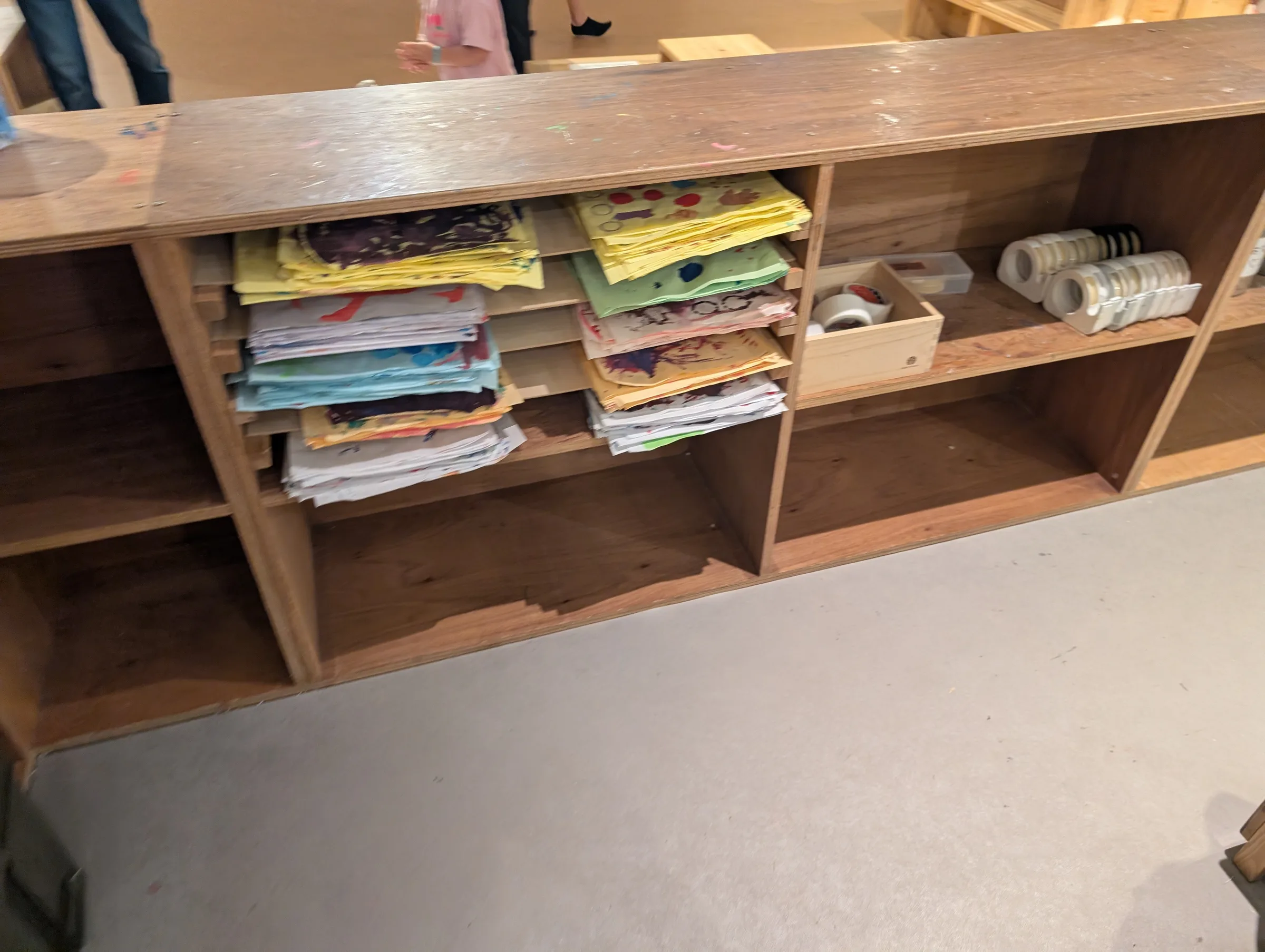
The craft room has shelves packed with materials like milk cartons and cardboard, and kids can make whatever they like.
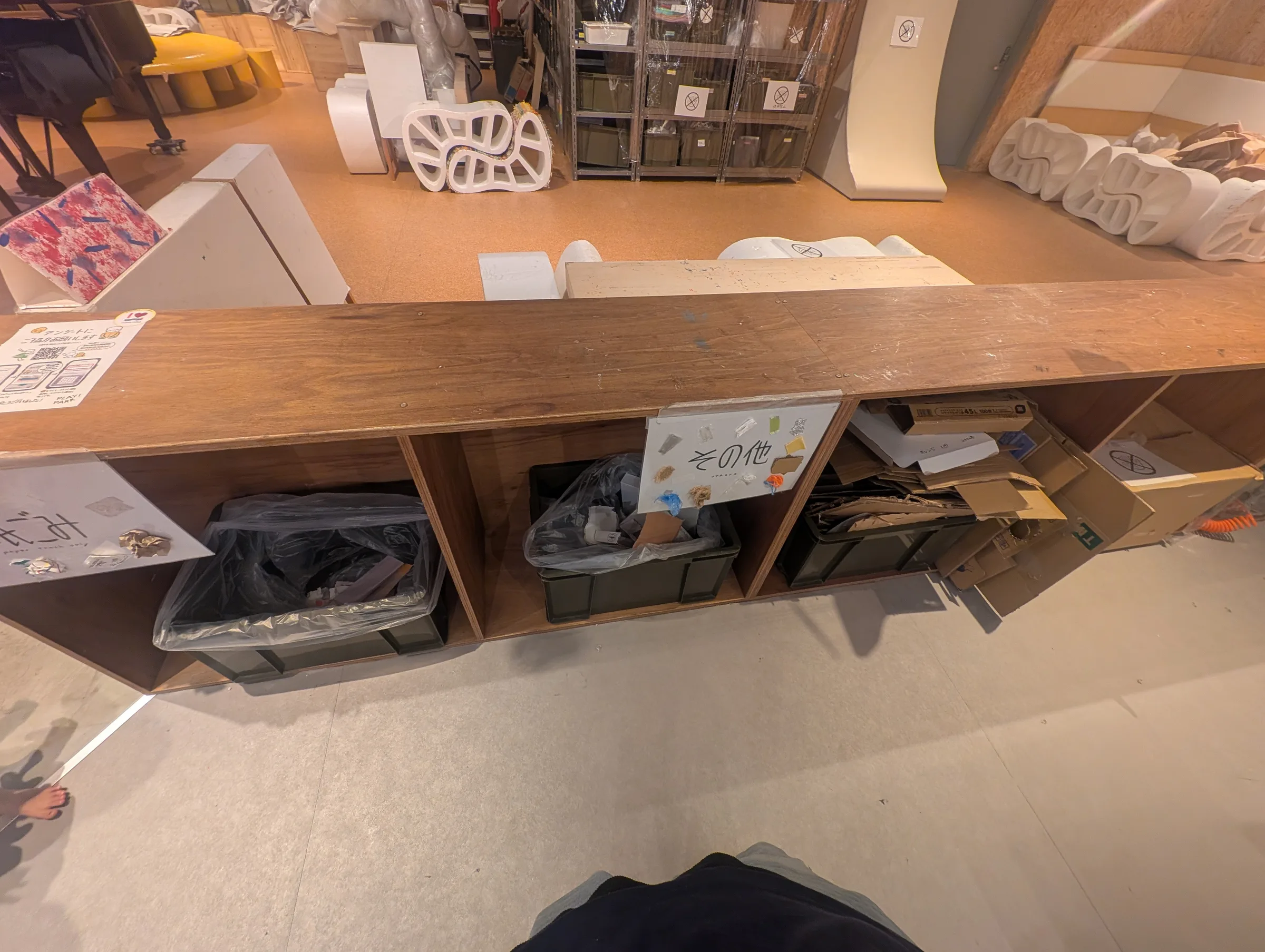
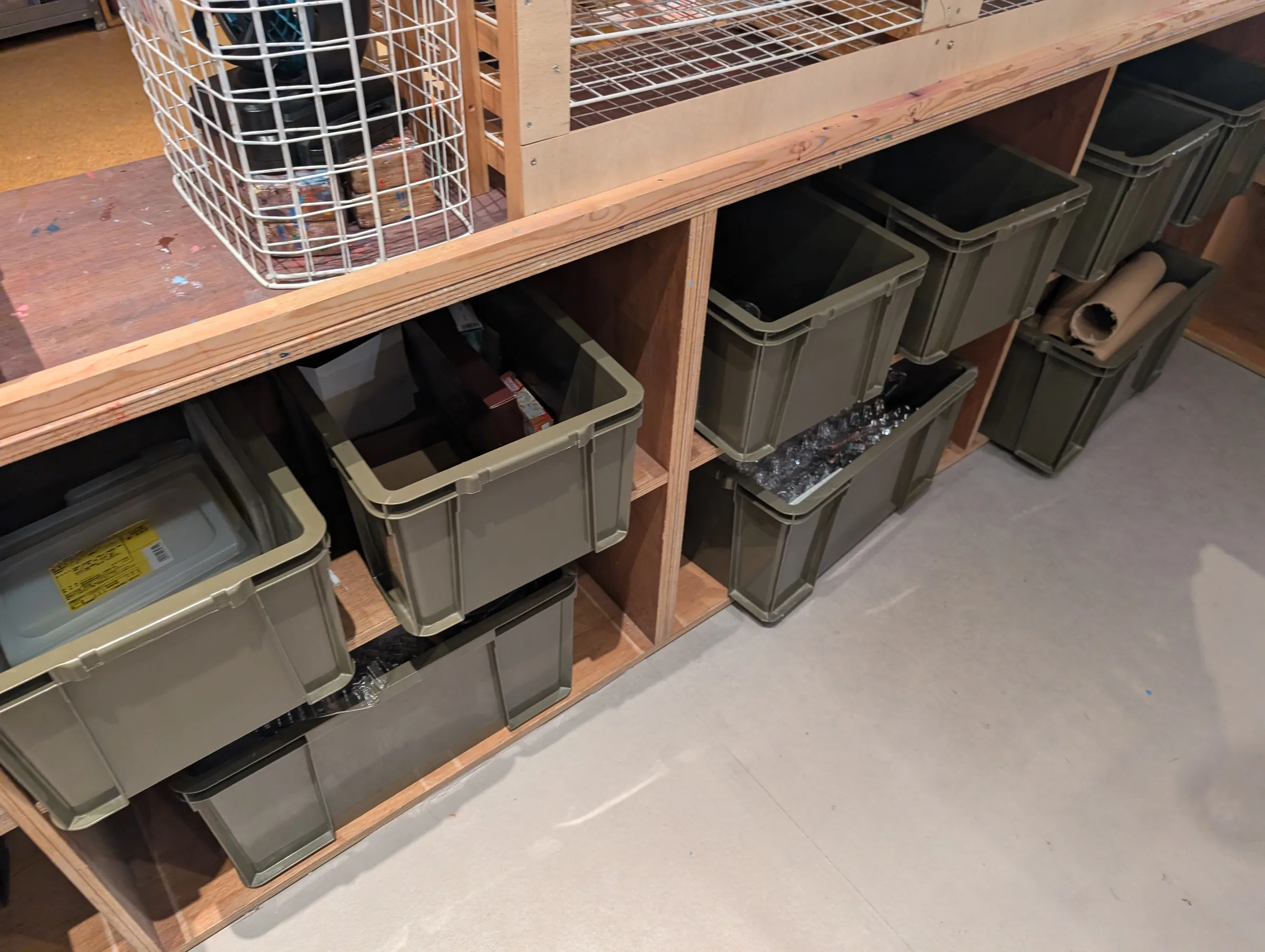
Colored paper and drawing paper are sorted by type, so even choosing materials becomes part of the fun.
At the entrance there’s a “Today’s Workshops” board. The content seems to change by time slot, so I’d recommend checking it first thing when you arrive.
The painting tables themselves are covered in color from all the kids who came before. Since nobody worries about mess, kids can go all out with the kind of play that’s hard to allow at home.
Picture books, a piano, and a movie corner
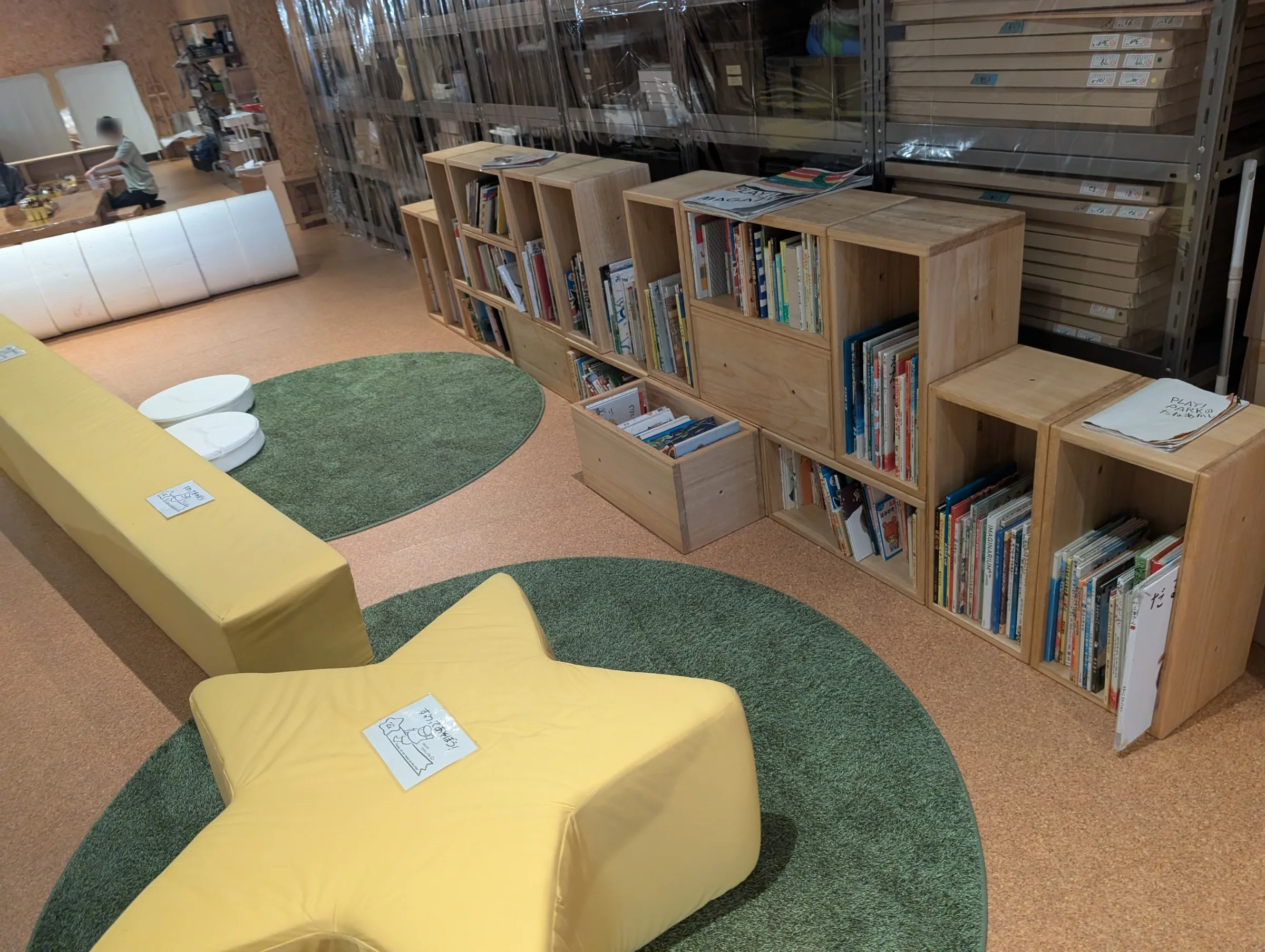
There’s also a picture book corner where kids can read while sitting on star-shaped cushions. It’s perfect for cooling down after running around.
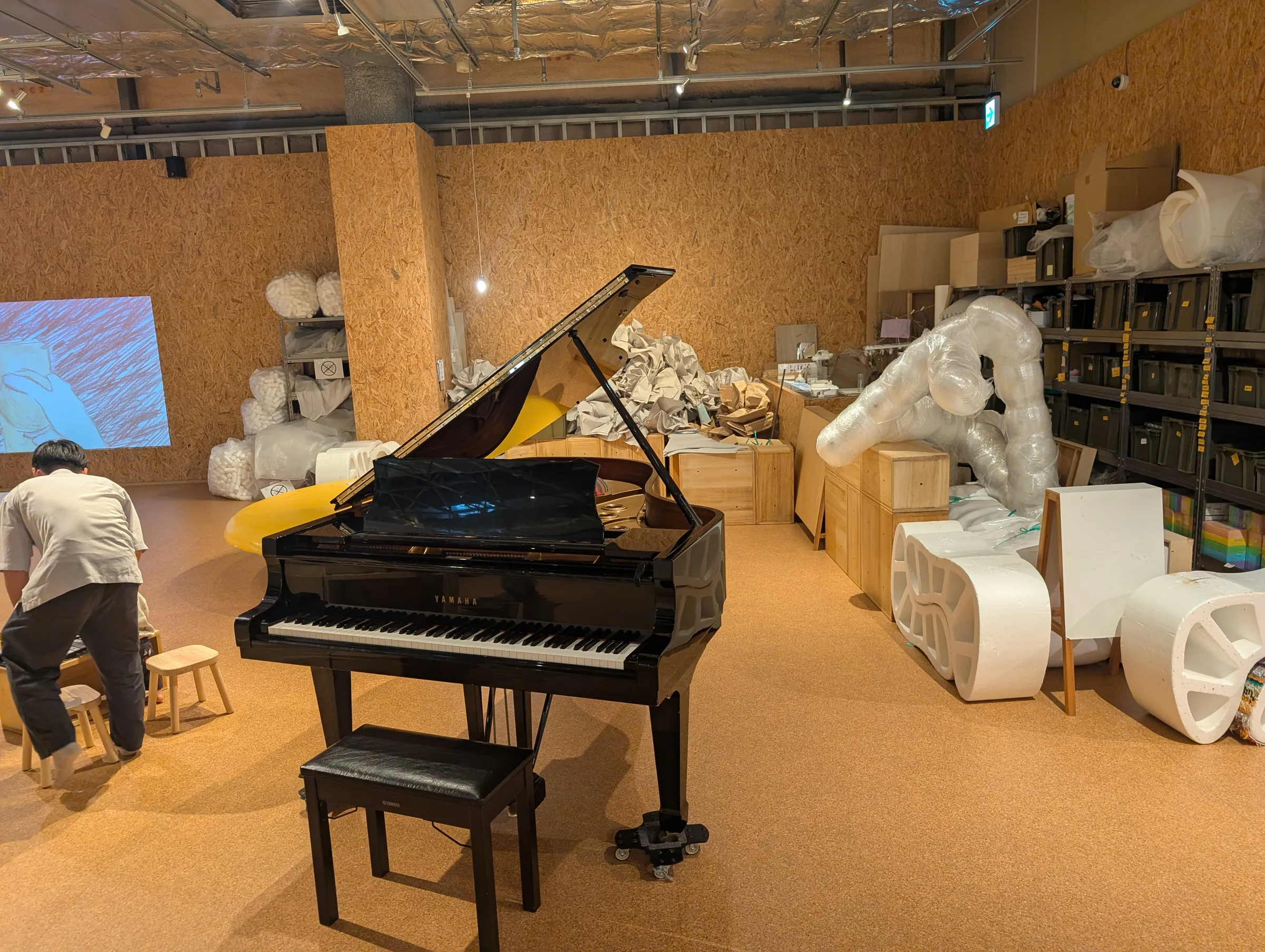
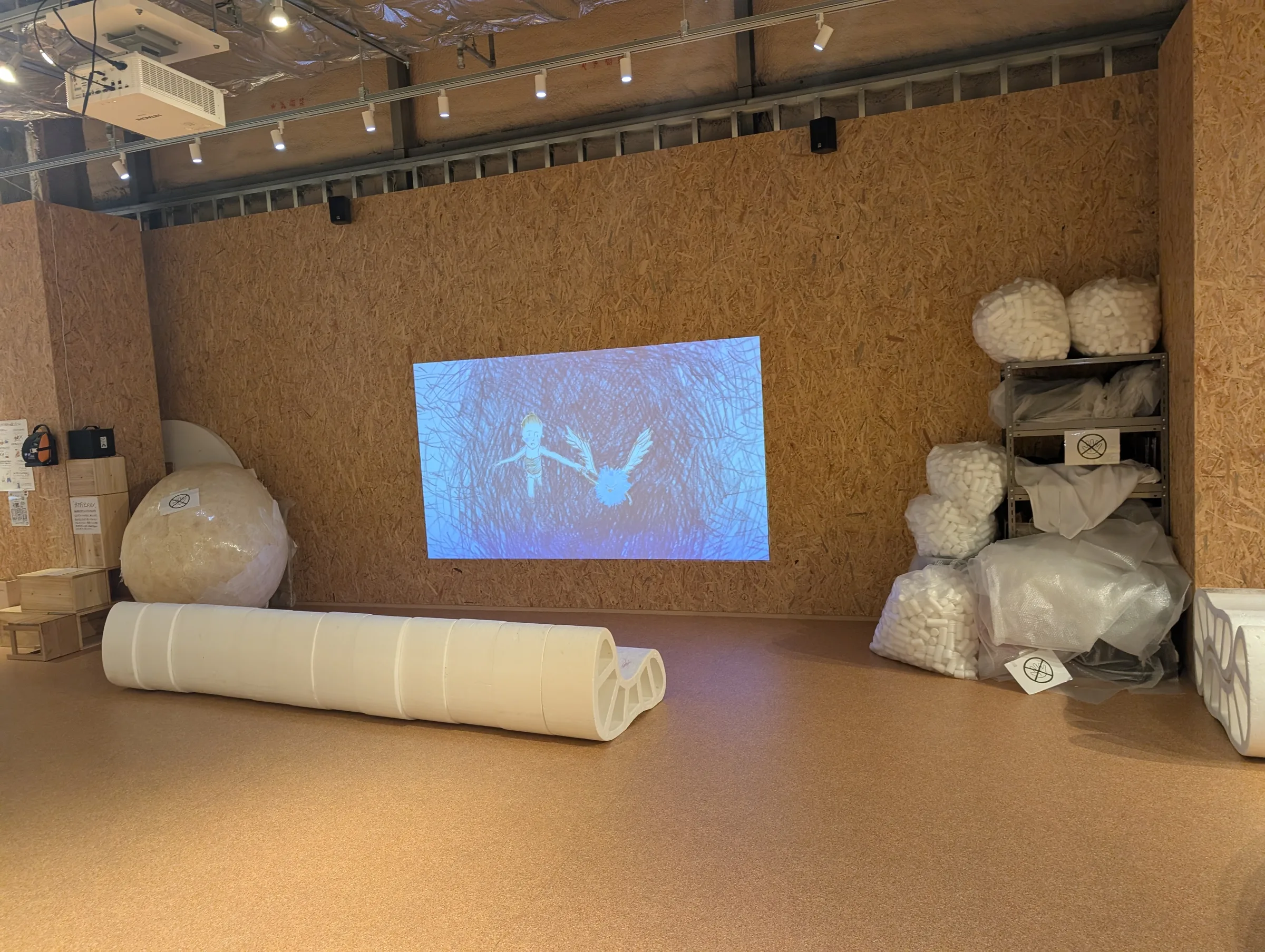
In the back, there was a space with a grand piano and a movie corner where films are projected onto the wall.
My honest take
A child’s 1-day pass is ¥2,200 on weekdays and ¥2,500 on weekends — not cheap for an indoor play space. Add parking, and if you go in without a plan, the costs add up. That said, considering that crafts and paints are unlimited at no extra charge, and that the “Osara” installation changes every season, my honest feeling is that we got our money’s worth.
It’s a completely different thing from playgrounds where kids burn energy on play equipment — it’s a place where kids decide for themselves what to make and how to play. It offered an experience unlike other play spaces, and my kids absolutely loved it. I’m already looking forward to seeing what new “Osara” installation will be there next time.